andrii.designer← back to the site
All chapters

Days 09–15April 30 – May 6, 2021

The dry middle

Lycian tombs
on footby roadRoute · 0%

Friday · April 30

Day 09

Gelidonya to Finike, and up

A black labrador, a lift from a man from Perm, fourteen kilometres of road, and the worst five kilometres of the whole trail. This is the one day I wrote down while I was still on the trail.

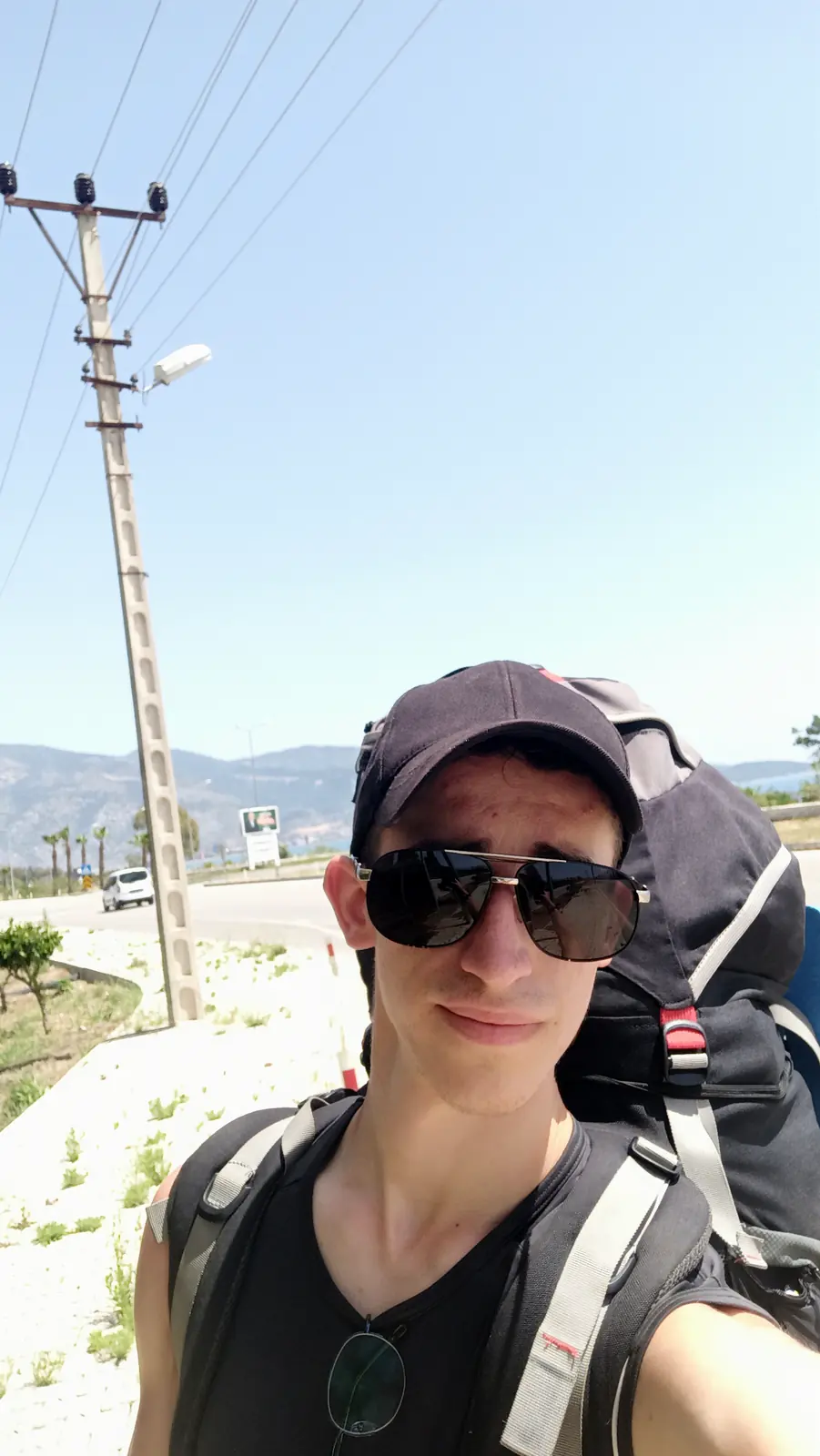
Andrii in sunglasses and a cap with his backpack, beside a road under power lines
The road into Finike

01 · Food

Bread and ayran.

All those kilos of freeze-dried meals I’d carried from home had become boring. So I started buying local food in village shops instead.

Ekmek, the Turkish bread. Cheap hazelnut spread, which was actually good. A bottle of ayran to wash it down. Some tomatoes and sausages. It was cheap, it was filling, and it was genuinely tasty, much better than another bag of dry food.

ekmek + hazelnut spread + ayran. every day.

Day 9

Lycian Way · 30 April 2021 · from my notes, translated from Ukrainian

Today wasn’t an easy day.

It started in the morning. I hadn’t picked the best spot for the night, so I slept on a slope. I got up and set off early, as always.

As I walked past a village, a dog started walking with me. It had two collars and had come out of a campsite, so I think it belonged to someone. I set off on my way, and the dog kept following me. When I was two kilometres from that campsite and it was still behind me, I started to worry about the owner, and about the dog.

I tried to scare it off. After that it followed me from a distance. Maybe it sensed that I needed it, since I was walking alone. Maybe so. But I can’t take responsibility for a dog as well, not in this situation.

So three or four kilometres from that camp I hitched a car to the next town. I don’t know what happened to that dog, but I hope it’s fine. It was a black labrador.

a black labrador with two collars

The driver who picked me up was from Perm, in Russia, and had been living in Turkey for the last three years. Thanks to him I learned that in Turkey something is always in season: the harvests are so spread out that there’s always something ripening. And right after that I came across loquats, a fruit that was in season just then.

Then I headed for the next town, Finike. It’s about 14 km by road, and I decided to try hitchhiking. Nothing worked, so I started walking, fast. Probably because of the coronavirus there weren’t many cars, and nobody wanted to pick me up. So I got to town on foot.

At the edge of town I saw a supermarket and went in for ayran, the cold yoghurt drink. I never found a one-litre bottle, so I bought other, not very healthy food and had lunch behind the building. Then I carried on. In town I bought more food and picked loquats. After that I set off into the mountains.

I had two options: the car road or the waymarked trail. At first I wanted to take the road. Then, for some reason, I changed my mind and took the trail. That was a very bad idea. Worth mentioning: the climb was 600 metres in 5 km.

+600 m in 5 km

So I start up the path. Thorny branches and leaves, sharp stones. At first it went relatively well. I got scratched and torn. And then it turned into a complete disaster. The path had been walked, but it wasn’t marked well enough. Maybe I lost it, maybe I didn’t. Either way, I was pushing through real bushes, along something that looked walked.

It was real hell. I was covered in sweat, and the branches showered everything on them down onto me. I clambered through the bushes, trying not to snag my pack on the trees. Bottles hung on the outside of the pack and kept falling off, and every time I had to take the pack off and pack them again.

I was no longer sure I was going the right way, or what the hell I was doing there. The sun was starting to set, and it looked like I might spend the night right there, sitting wherever I could, because walking those steep slopes through that vegetation in the dark would have been suicide.

I was already swearing and wondering who I’d upset.

And then I come out onto a path with waymarks. Drenched in sweat for the umpteenth time, dirty, out of water because I’d drunk everything I had. And I start to come back to myself.

True, I still had to walk more than a kilometre to the water, but that was something.

I reach the water point and see a cut-open barrel lying there like a trough, full of dirty water. I hope this isn’t the water marked on the map. But I couldn’t find anywhere else, so I decide to at least try it, through my filter.

A hornet flying around the water made it hard to fill up. I managed to get a little, though. And it turned out the water had some kind of oil in it, like engine oil.

no water left · one barrel · one hornet
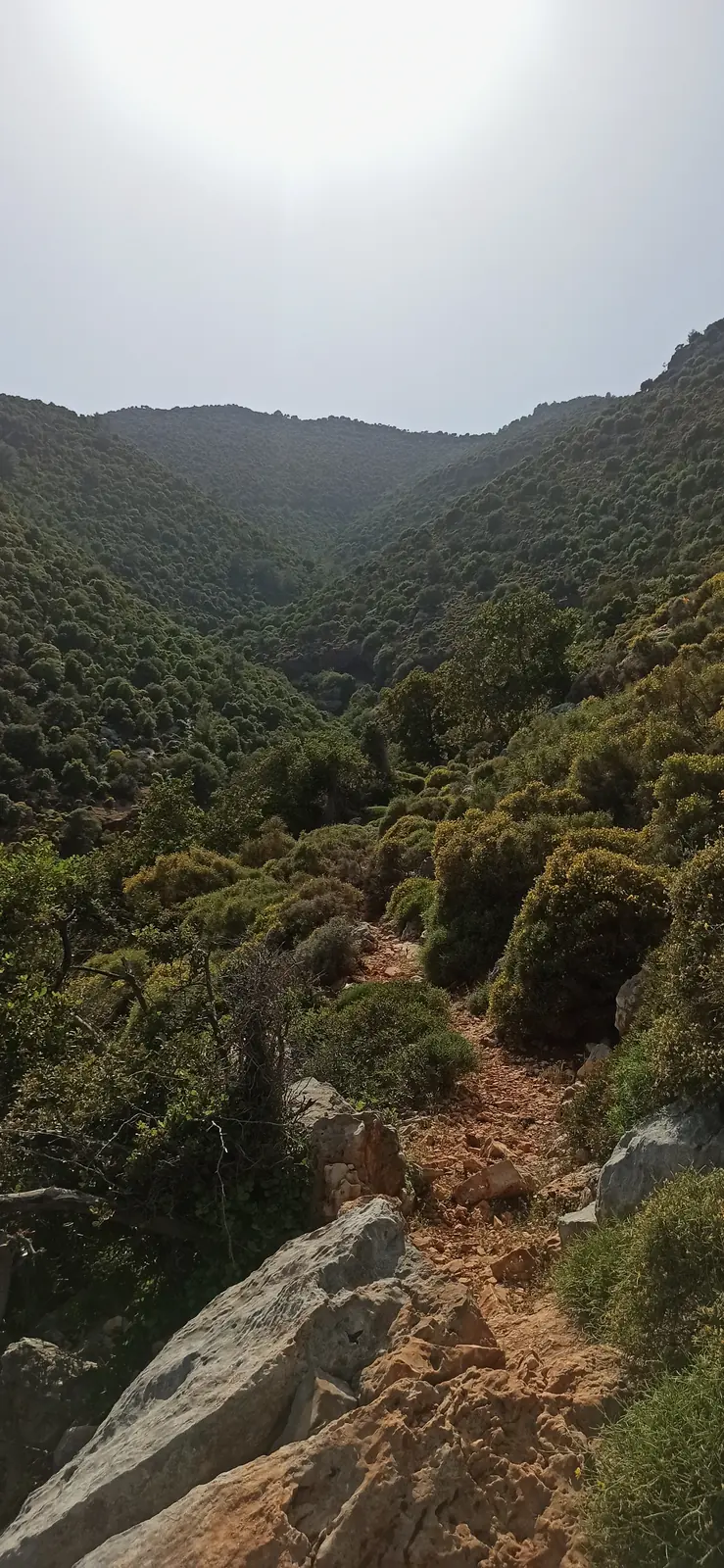
A narrow path dropping into a green valley under a hazy sky
The climb above Finike
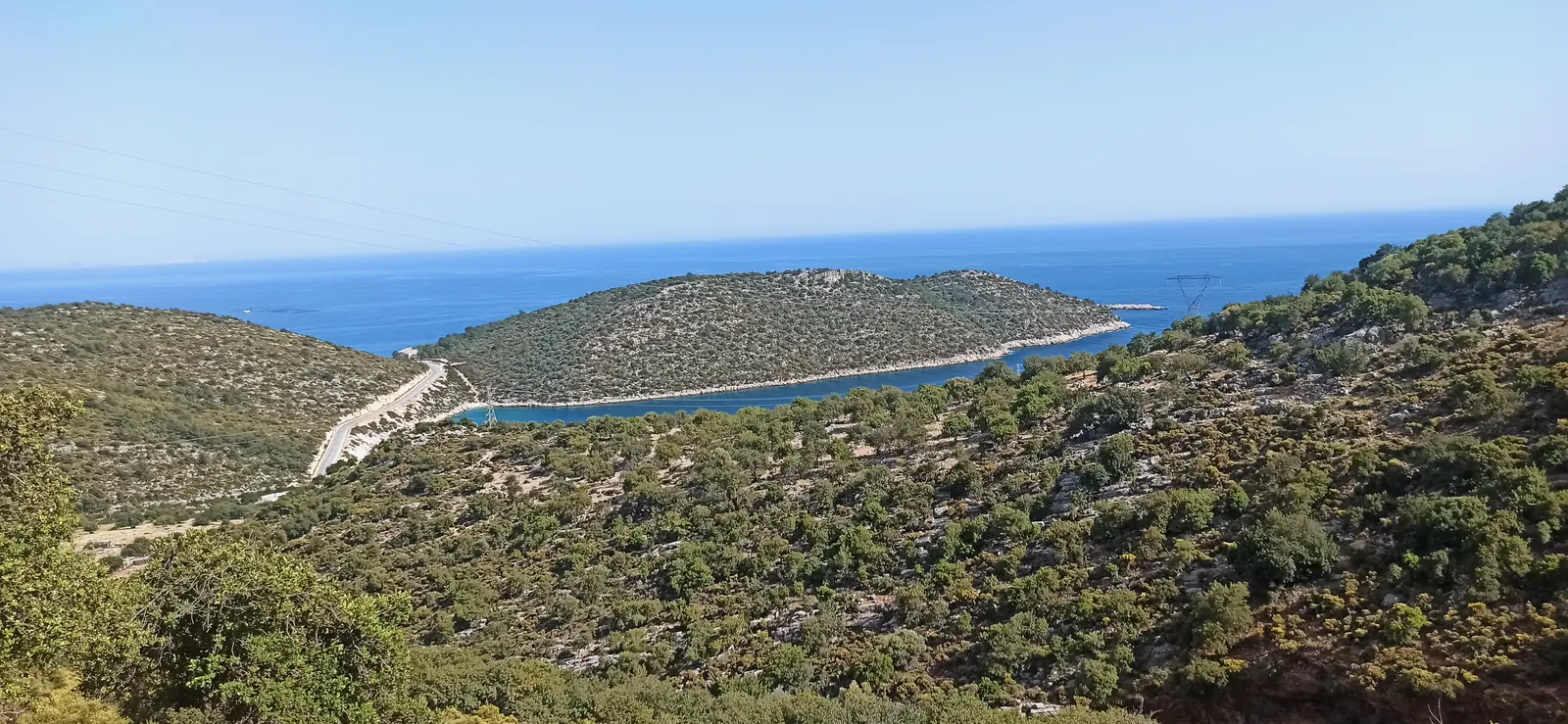
A long green headland enclosing a blue bay
Finike bay, far below
Finike → Demre · relief from elevation data, height ×2.2Scroll · 0%

The wild middle

Nothing for fifty kilometres.

Between Finike and Demre the trail climbs into empty mountains: no villages, almost no people.

Day 09 · evening

600 metres up in 5 km.

Thorns, lost waymarks, sunset coming, and no water left.

Day 10 · May 1

Up into the hills.

Stony tracks, pines and white rock. It took me two days.

Day 11 · May 2

Down to Demre.

Out of the mountains, back among people, shops and road mirrors.

0metres

03 · Water

A barrel, a hornet
and engine oil.

When I first read about the Lycian Way, I learned there could be problems with water, so I’d bought a water filter before the trip. I still have it at home. Actually, I have two.

This was where I finally needed it. At the end of day nine, the water point on the map turned out to be a cut-open barrel full of dirty water, with a hornet circling it and a film of oil on top. I filtered what I could, just to have something to drink.

CUT-OPEN BARREL HORNET FILTER STILL OILY ONLY WATER
Drawing · the water point at the end of day nine

Saturday · May 1

Day 10

Through the wild middle

The middle of the Lycian Way is quiet and empty. There are stretches of fifty kilometres with nothing and nobody on them, and very little water.

02 · The wild part

Nothing for fifty kilometres.

Between Finike and Demre the trail goes up into the mountains. There isn’t much to look at, no villages, almost no people. That stretch took me two days, and I suffered properly on it.

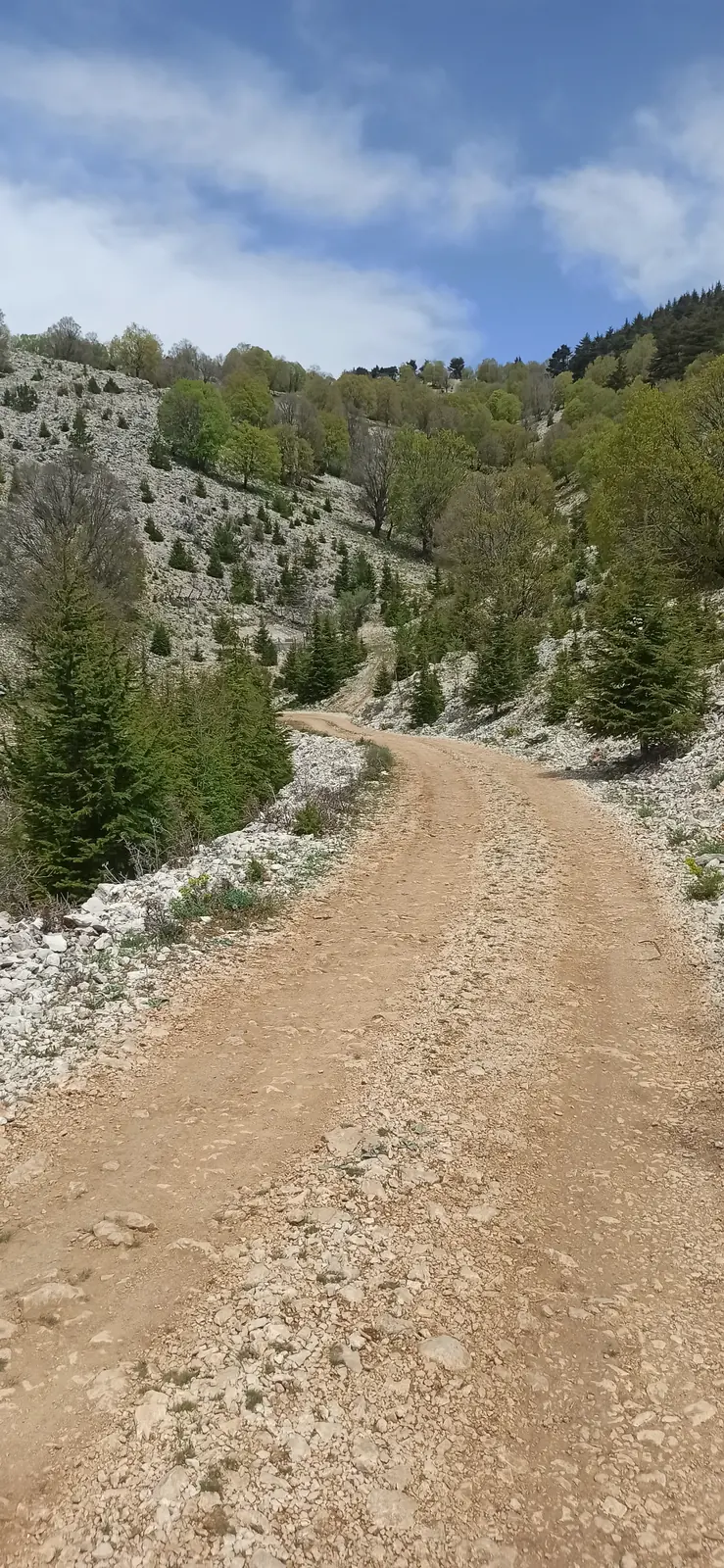
A stony track climbing between pines and white rock
Up into the hills
Finike → Demre≈57 km
Took2 days
Waterone barrel
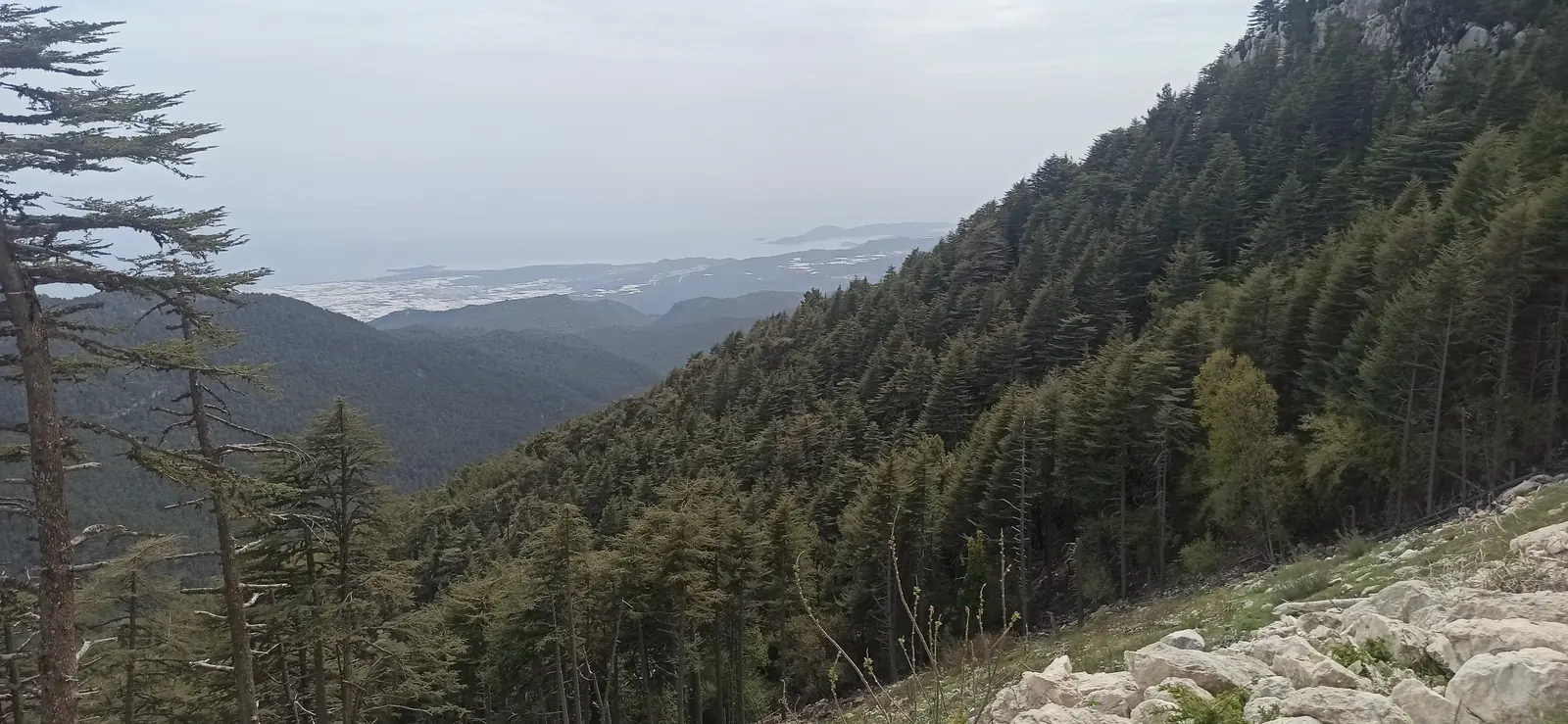
A steep forested mountainside falling away to a hazy valley
Nobody around

04 · Shelter

A room with a carpet.

Coming down out of the mountains I found a small building, about the size of a chapel. Inside it was unfinished, but someone had laid a carpet on the floor. There was even a sort of well next to it, with a bottle tied to a rope for pulling the water up.

I thought: great, I can sleep here without the tent. I filled up with water, ate, lay down and was getting ready to sleep when a car pulled up. A Turkish man came in, looked at me and said something like “ayn”. He didn’t speak English, and back then mine wasn’t much better, but his gestures were clear enough: it’s fine, sleep here. So I did. It was a good night.

“ayn.” — ok, stay.

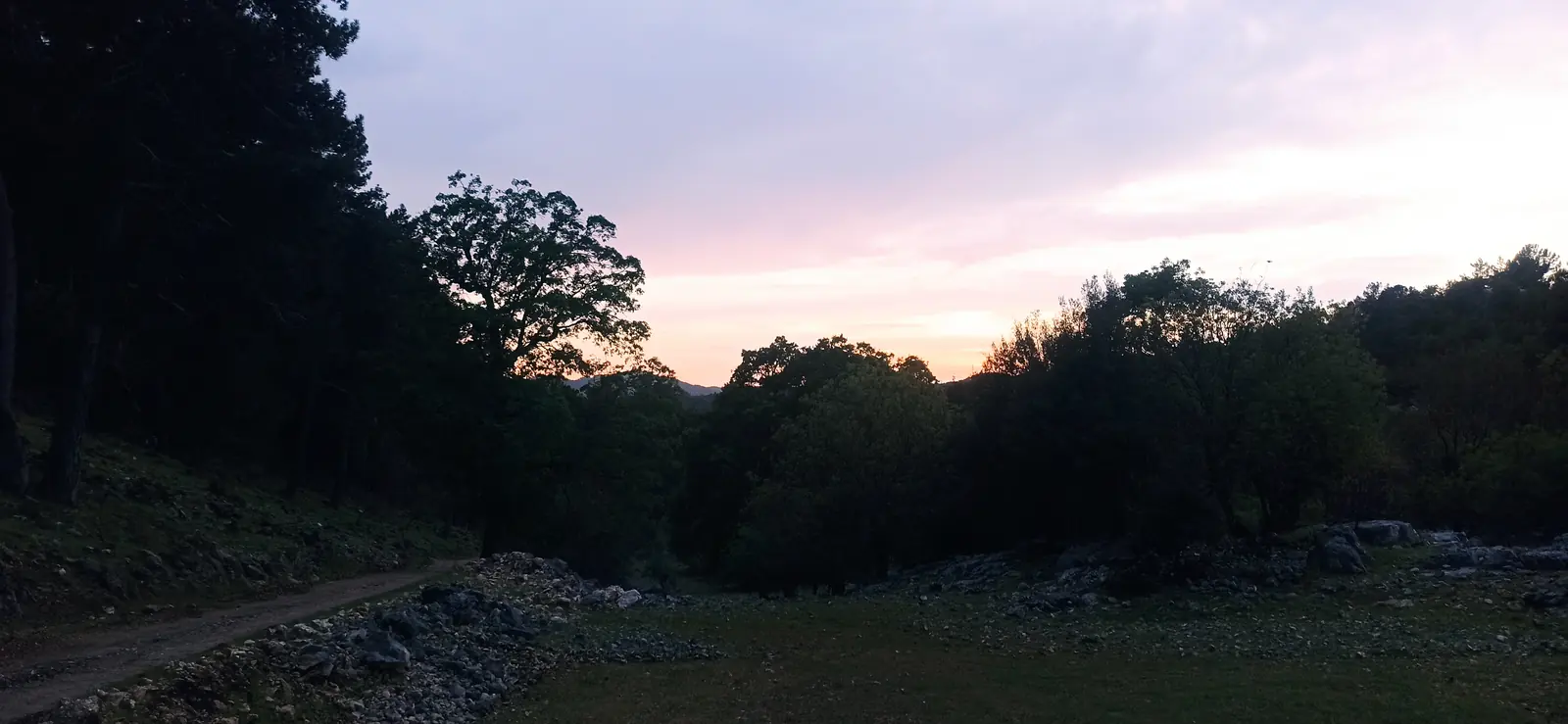
Dusk over a clearing at the edge of a dark forest
Coming down at dusk

Sunday · May 2

Day 11

Down to Demre

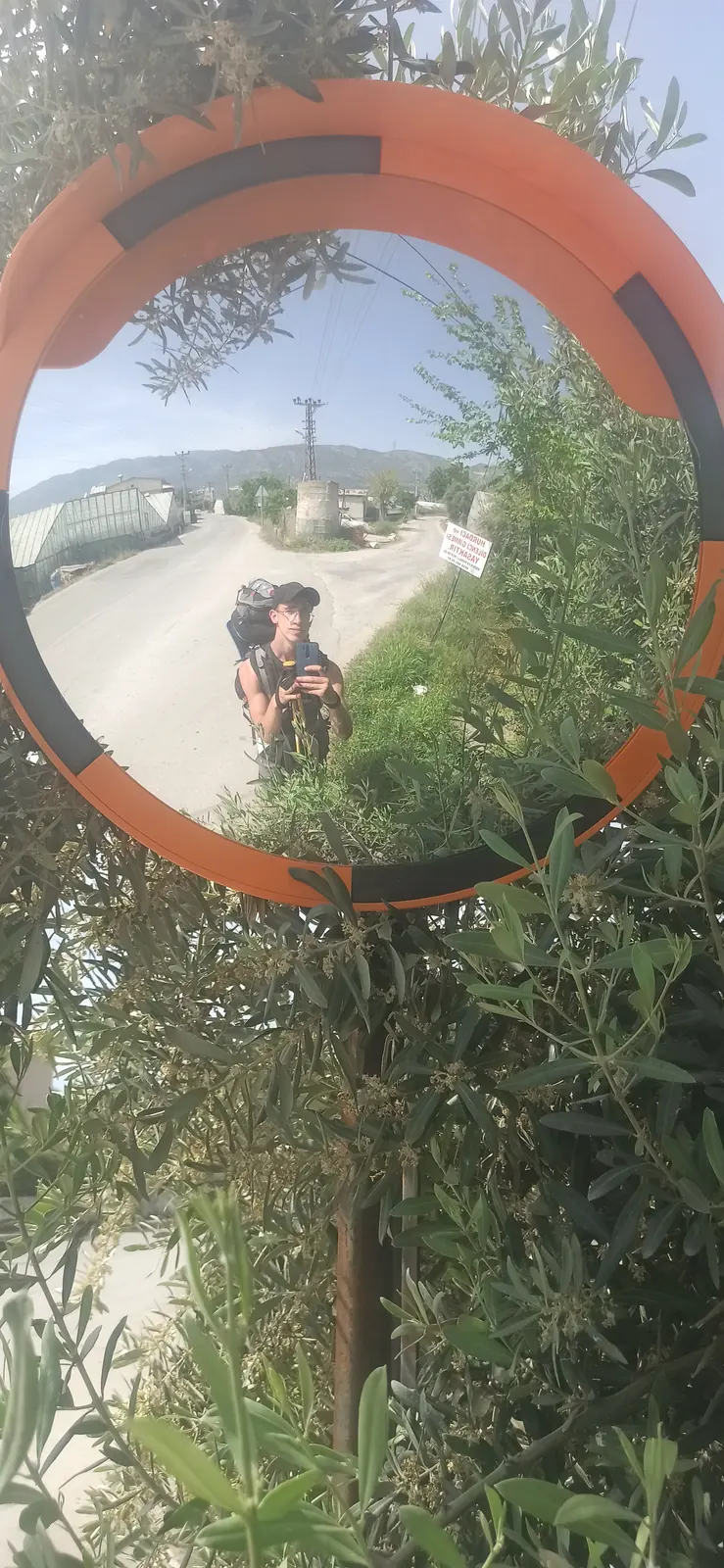
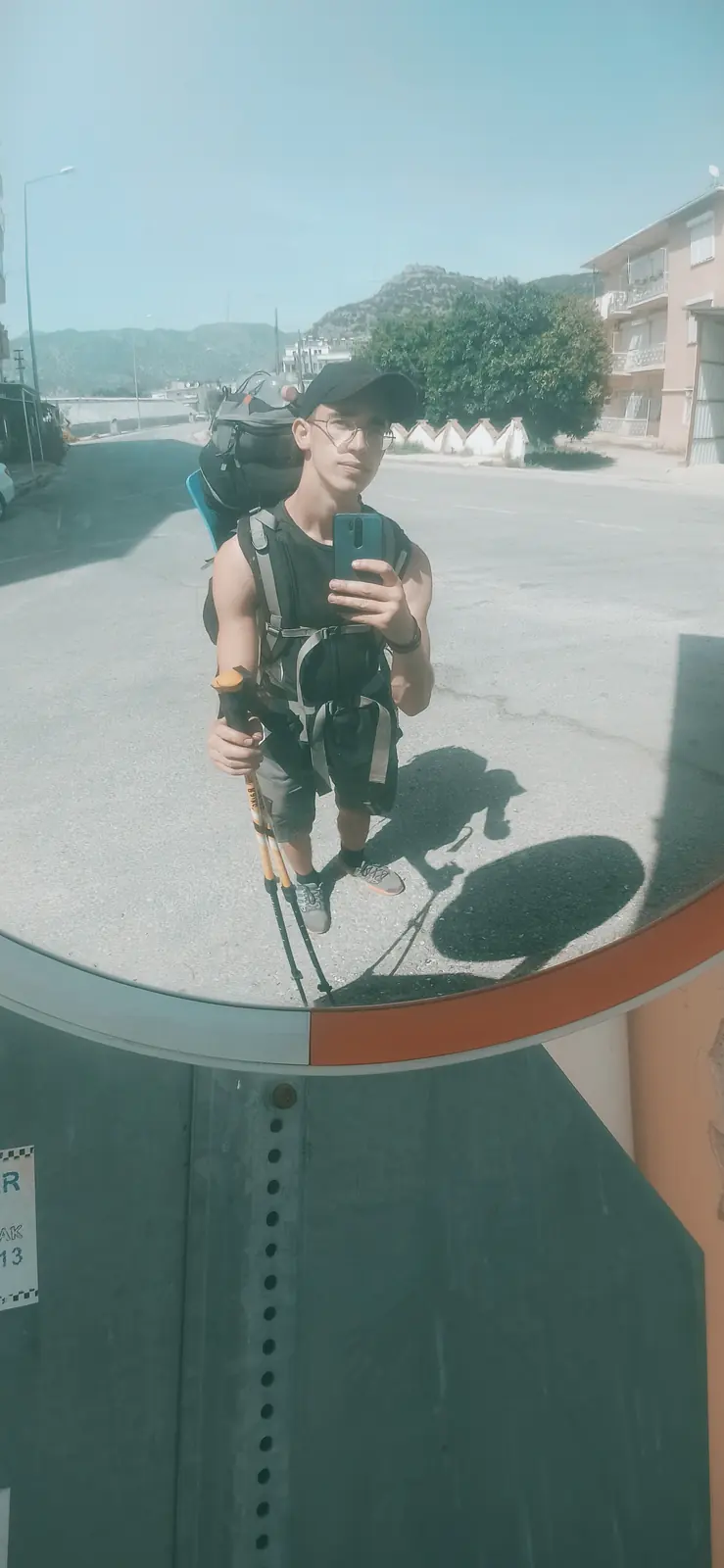
Out of the mountains and back among people, shops and road mirrors.

Andrii reflected in a round orange-framed road mirror among bushes
Self-portrait, road mirror
Another road-mirror reflection of Andrii with his backpack on a sunny street
And another one

Monday · May 3

Day 12

The Kekova coast

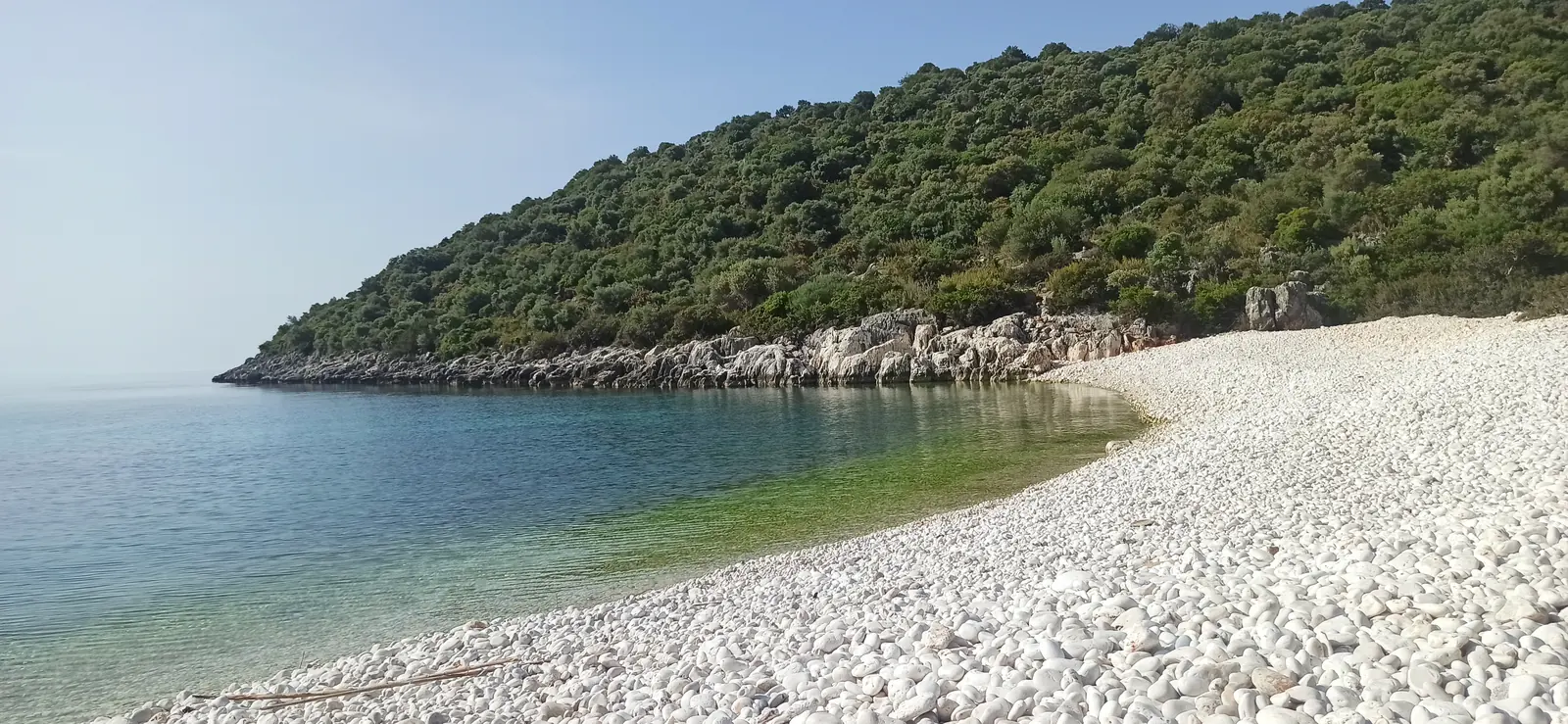
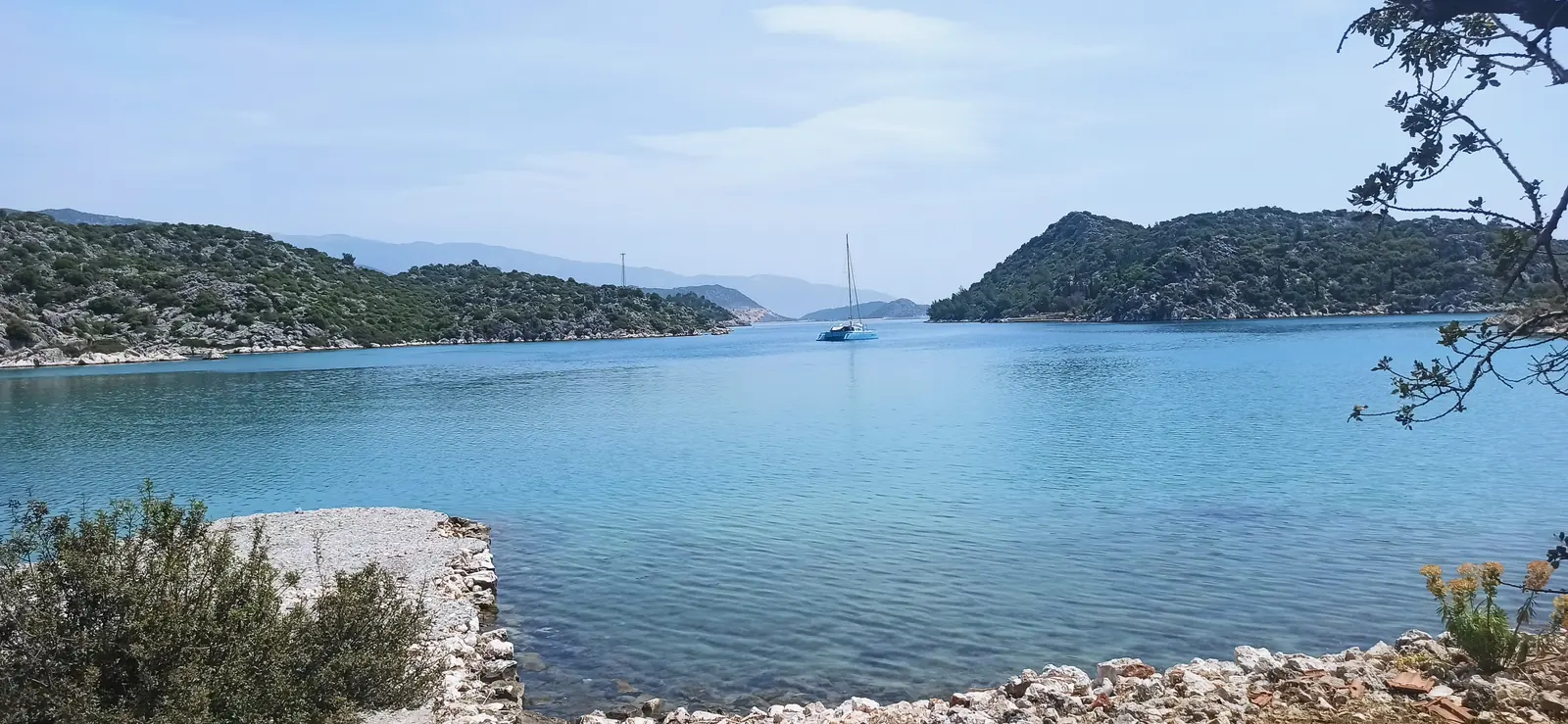
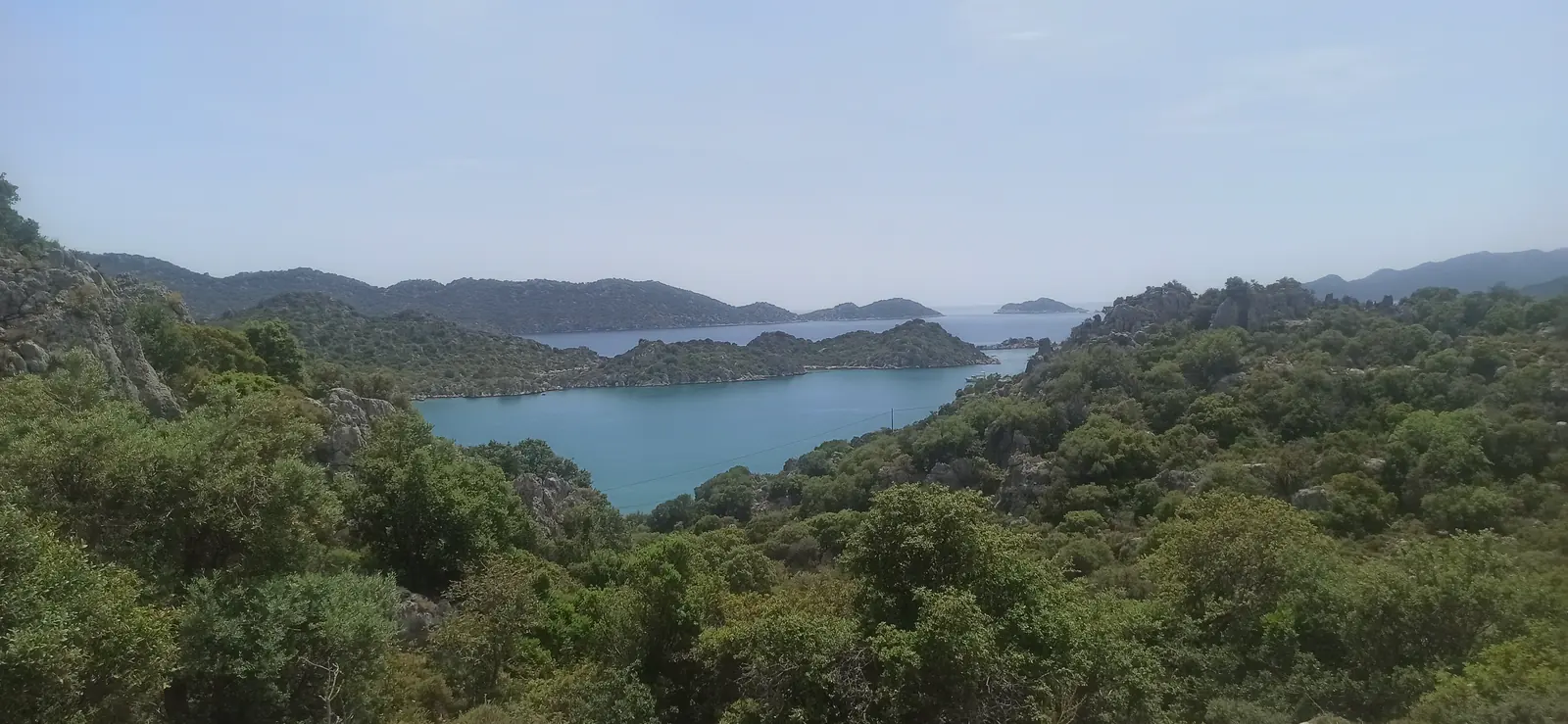
After the empty middle, the trail came back to the sea, and this part of the coast was the most beautiful yet.

A white pebble beach curving around clear green water below a wooded hill
White pebbles
A calm turquoise bay with yachts at anchor between green islands
Yachts in the bay

05 · Lycia

Tombs above the bay.

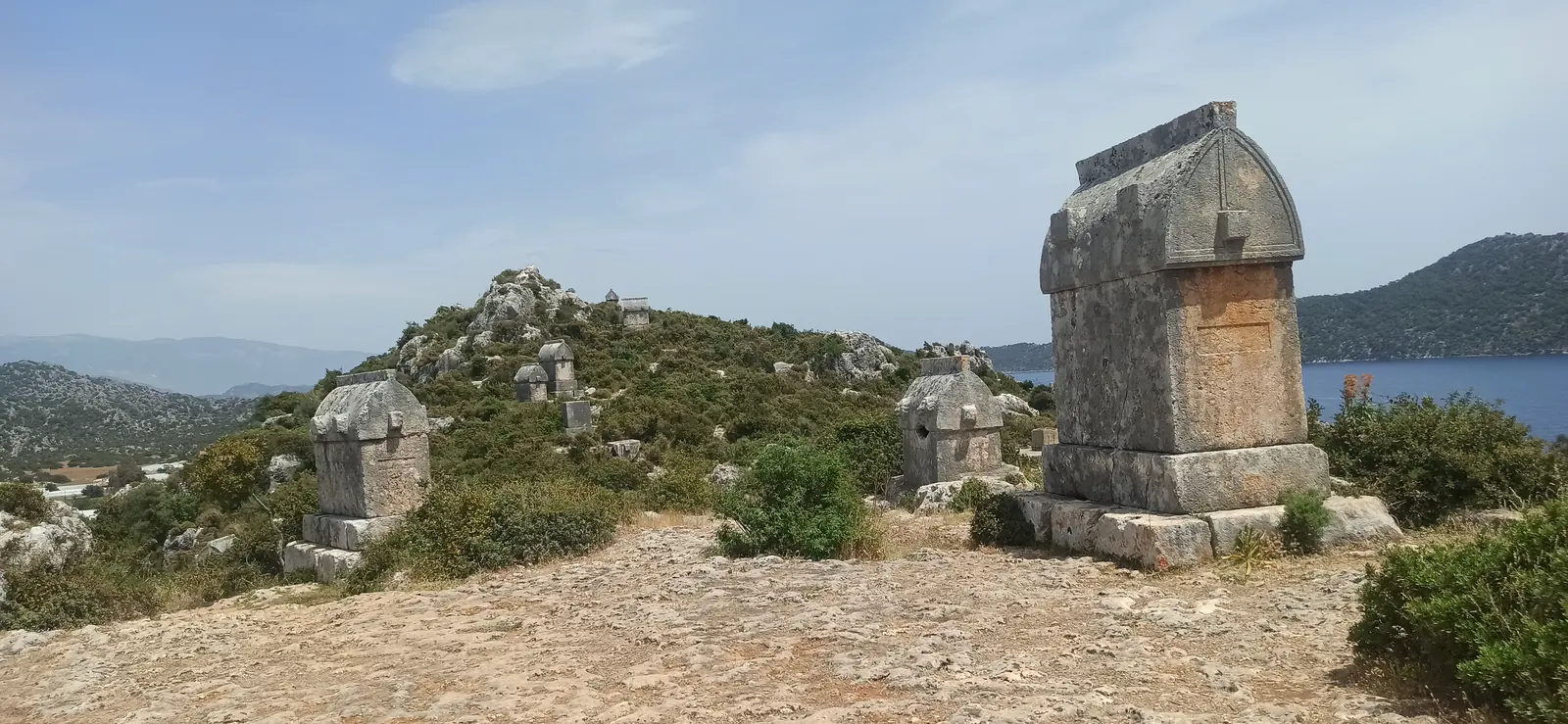
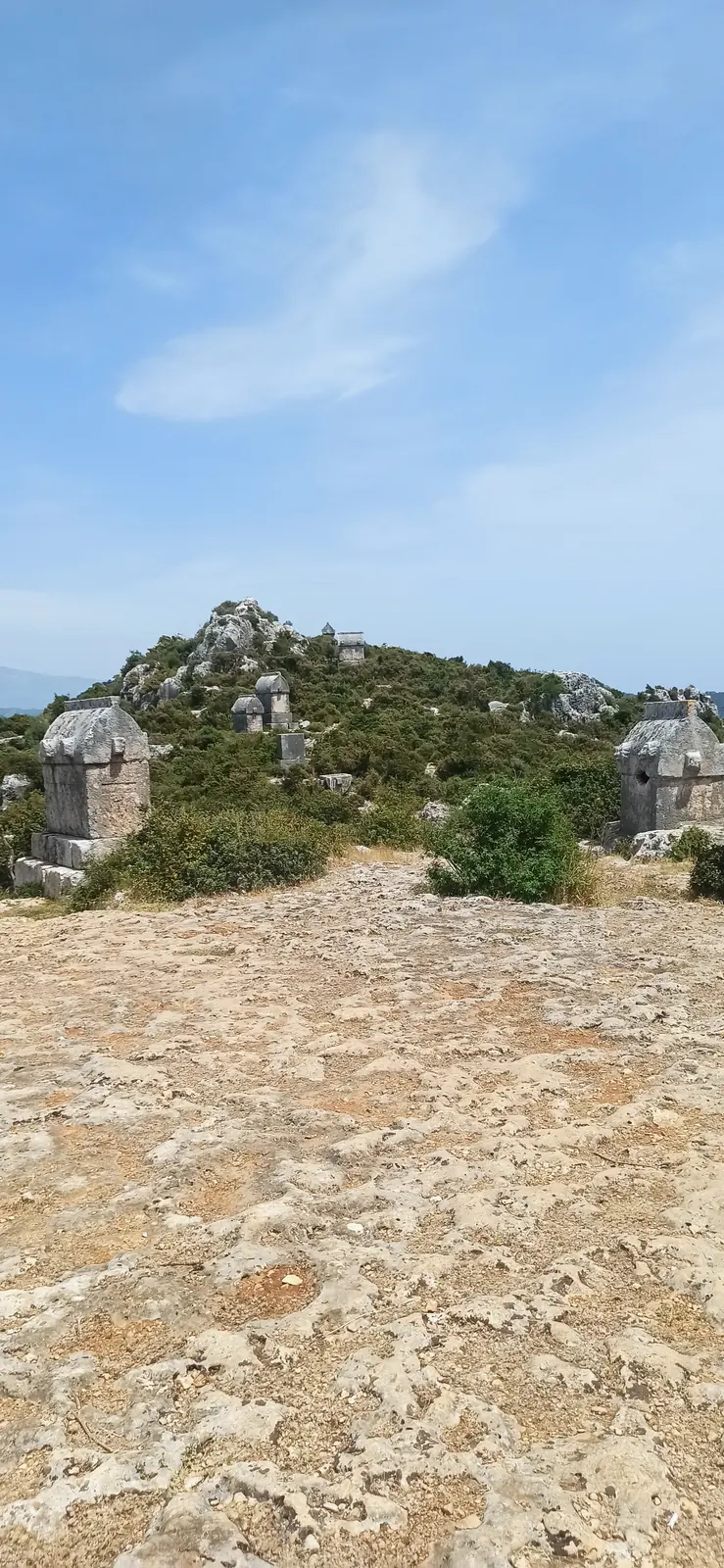
This is where the trail gets its name. On the hills above the water stand Lycian sarcophagi, stone tombs more than two thousand years old, looking out over the islands.

Ancient Lycian stone sarcophagi on a rocky hill above the sea
Lycian tombs
Islands and inlets of the Kekova coast seen over green scrub
Kekova

Tuesday · May 4

Day 13

Along the coast towards Kaş

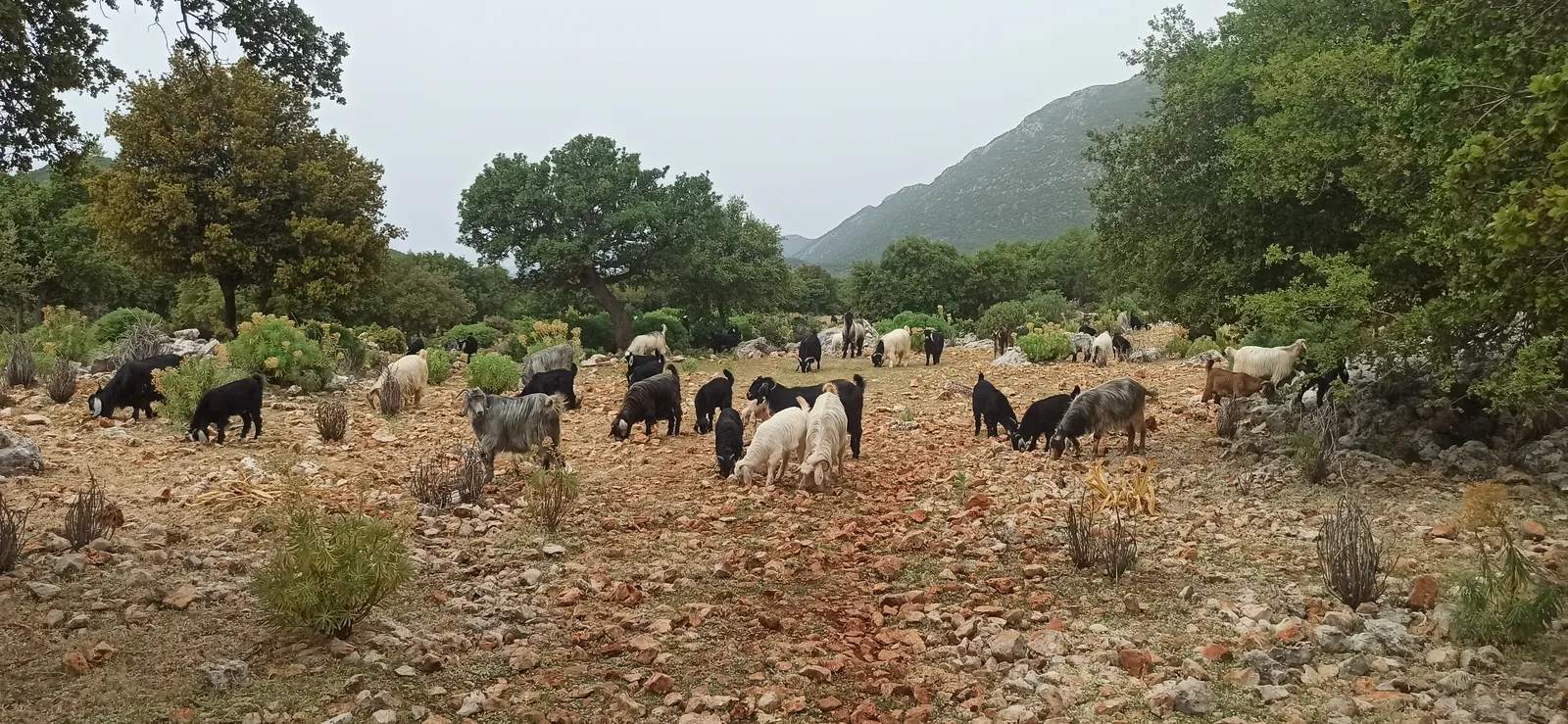
Dry hills, red earth, and herds of goats who didn’t care at all that I was there.

A herd of black and white goats grazing on red stony ground among trees
Locals, again
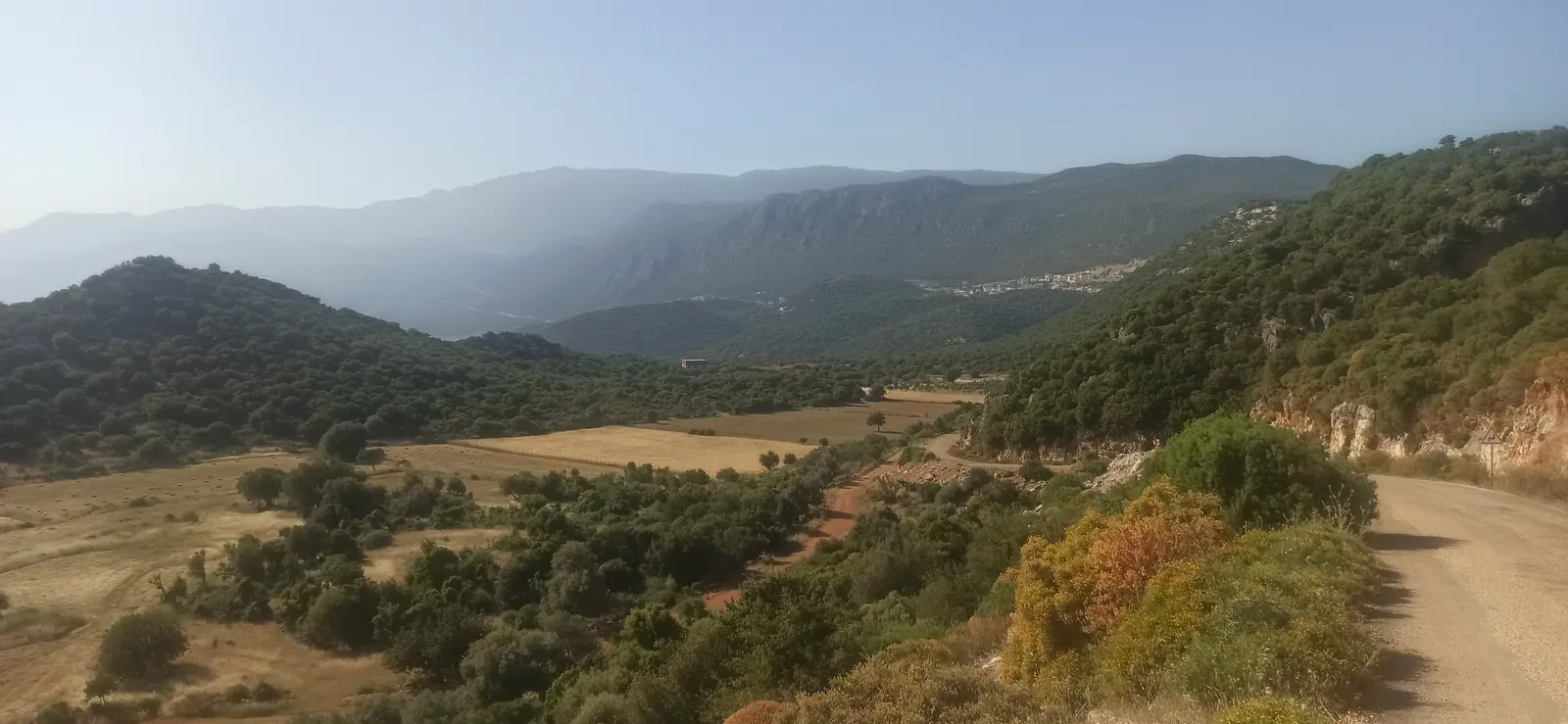
Dry golden hills and scrub under a hazy afternoon sky
Afternoon heat
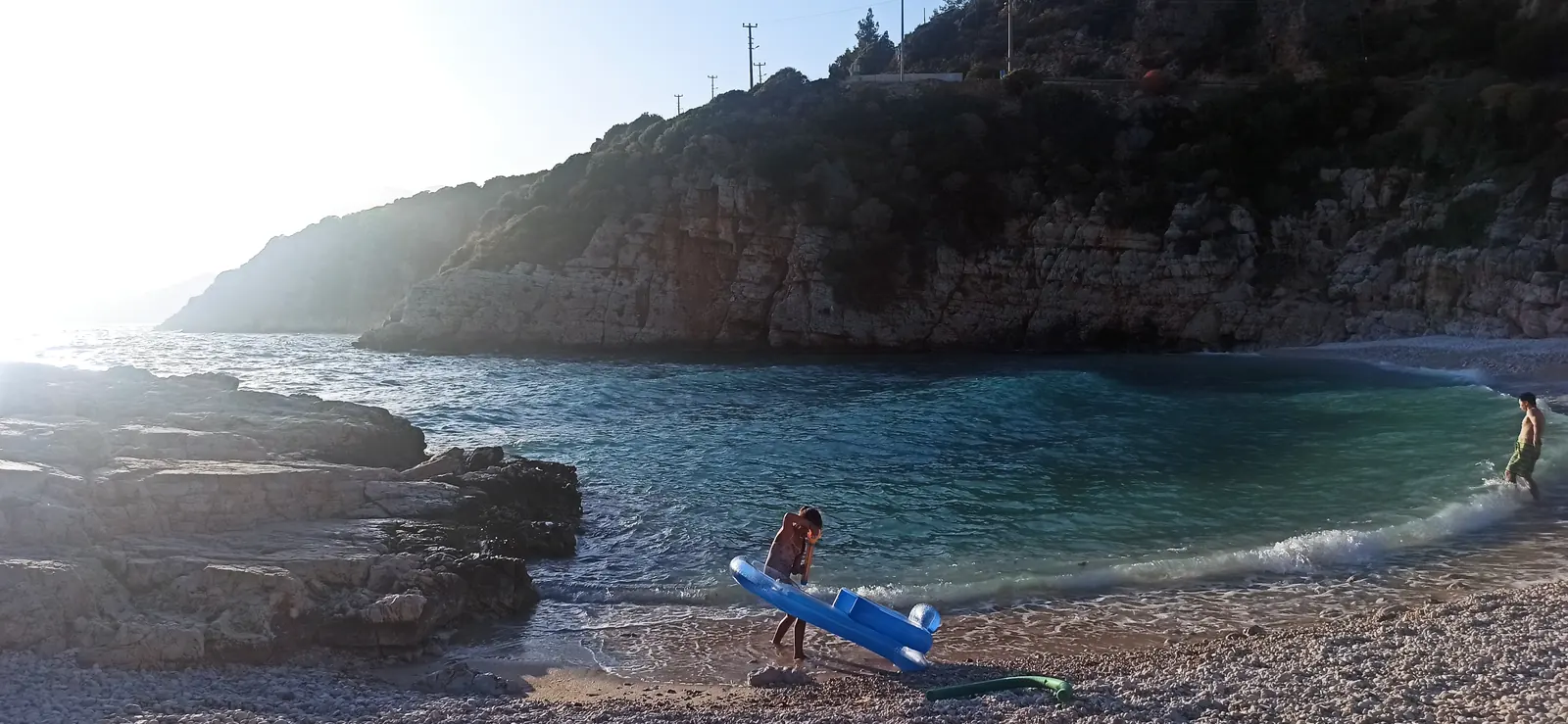
A small rocky cove with clear water and a kayaker on the shore
Evening cove

Wednesday · May 5 – Thursday · May 6

Days 14–15

Kaş to Kalkan

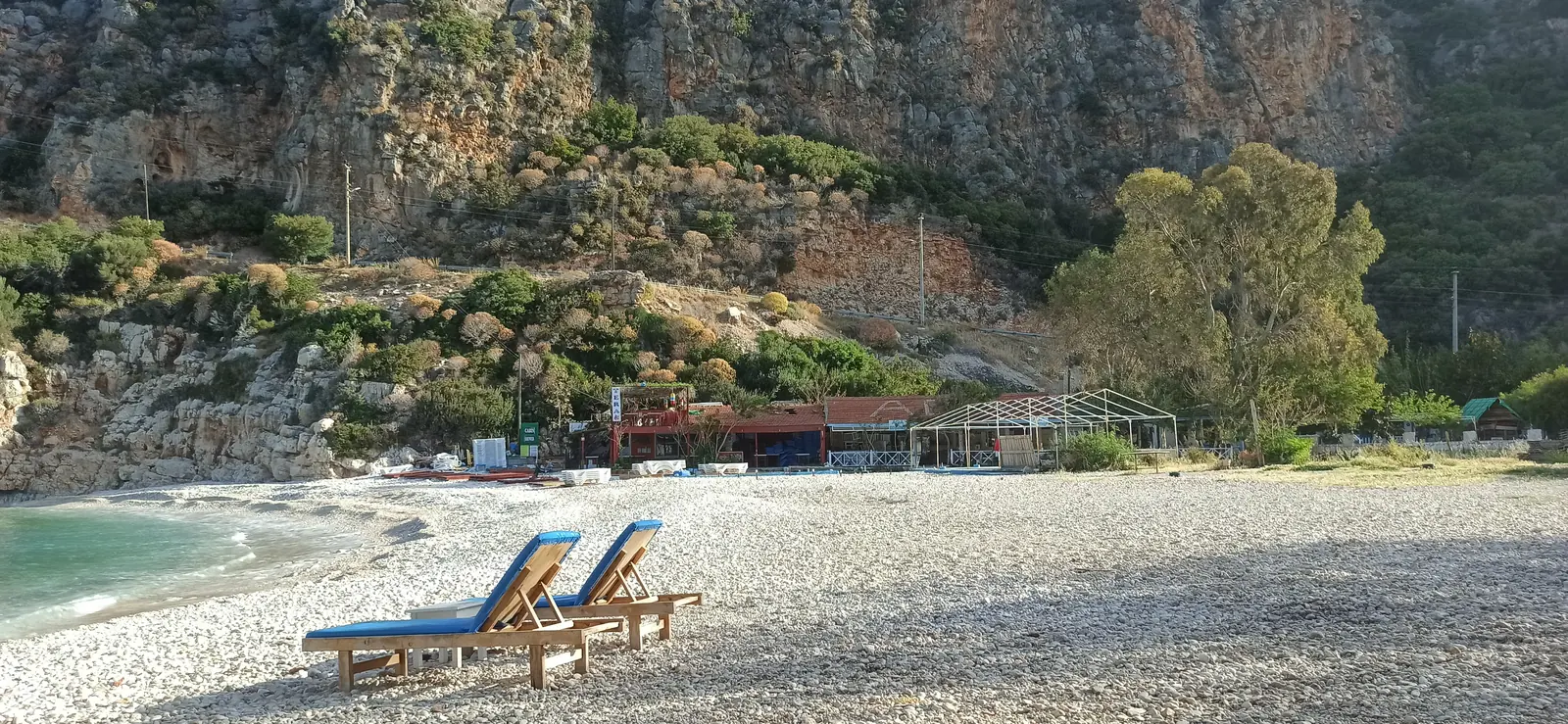
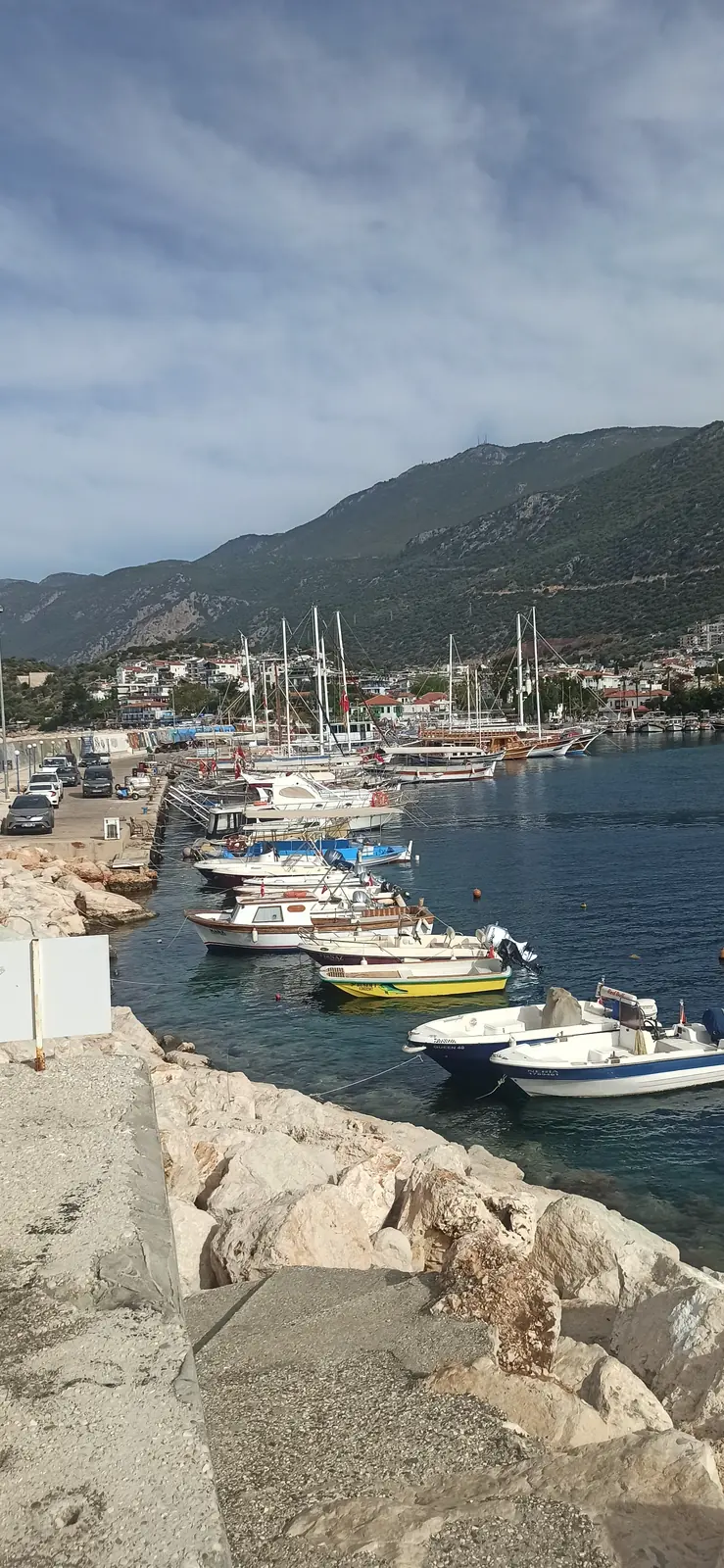
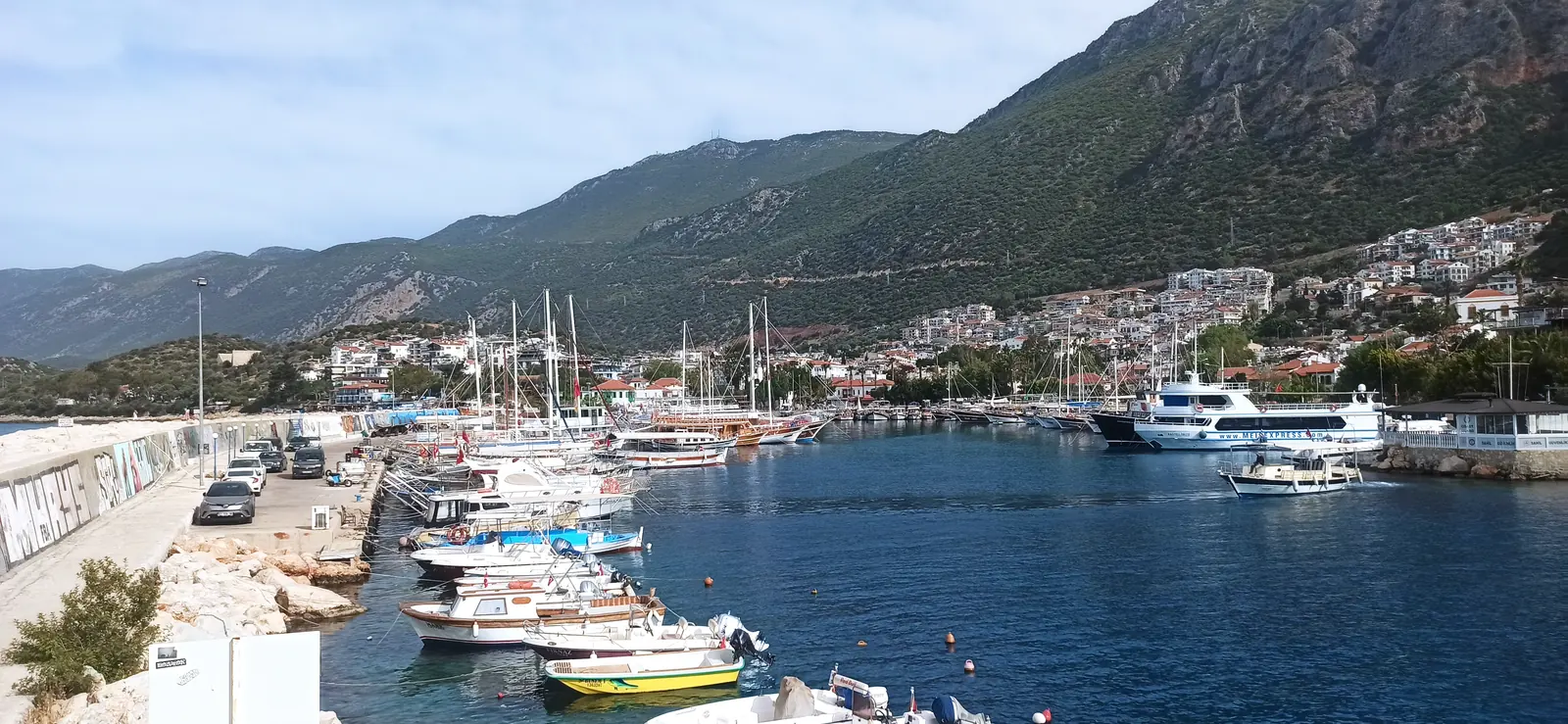
A beach under the cliffs, the harbour at Kaş, and the only part of the trail I didn’t walk.

Two sunbeds on a pebble beach below tall orange cliffs
Nobody on the sunbeds yet
Small boats moored along a stone quay in a harbour below green hills
Kaş harbour
The harbour of Kaş with yachts and white houses climbing the hillside
Kaş

06 · The shortcut

The one stretch I skipped.

From Kaş to Kalkan the trail climbs into the mountains again, a long way round. The coast road between the two towns is short. One wild section had already been enough for me, so this one I didn’t walk: I rode the coast road to Kalkan.

Days7
On foot≈160 km
By roadKaş → Kalkan

07 · A night on the hill

The woman in the other tent.

Around here I spent a night in a small, very popular town with a bay full of yachts. I never stayed in hotels, so I looked for a place for the tent. On the map there was a campsite on a hill above the town, really just some greenery. There was room for me, and one other tent already stood there. I didn’t see anyone.

In the night I heard sounds and opened my tent to look. A woman was there, crying, moaning, almost howling. In English she tried to explain: her mother had died, or she herself was dying, I couldn’t quite understand which, and it hurt so much that she came up here to get away from everything for the night.

I don’t remember the name of the town. I remember her.

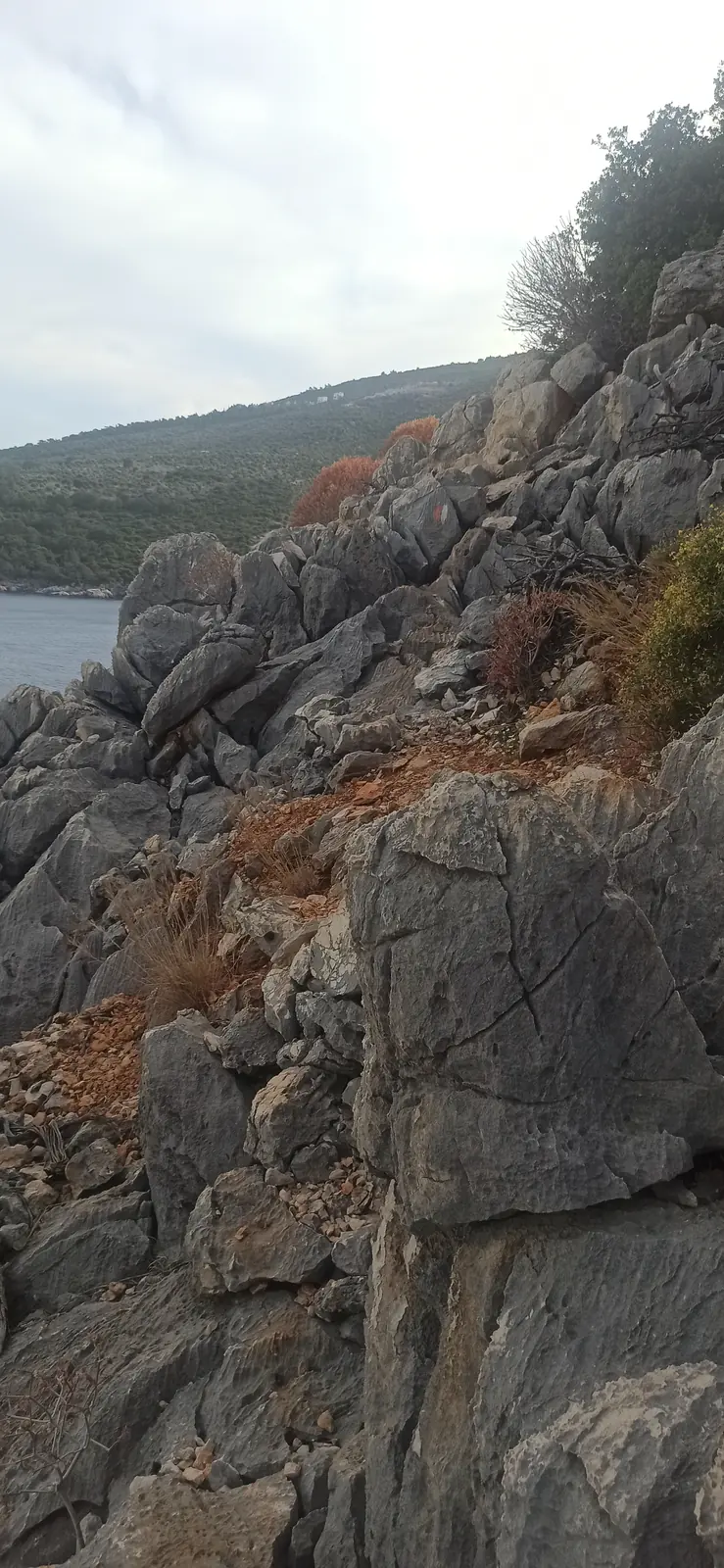
Grey rocks and scrub on a steep slope above the sea
Late afternoon