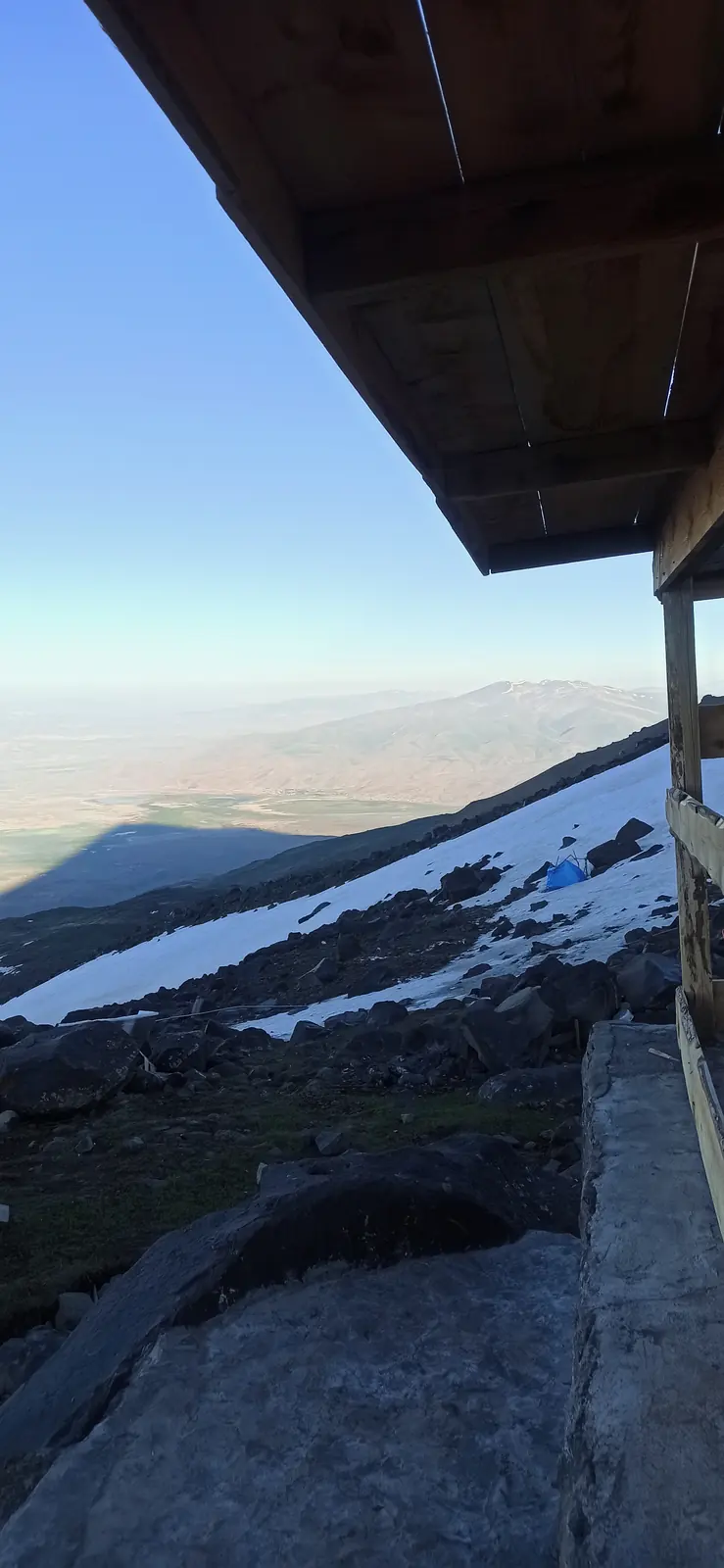
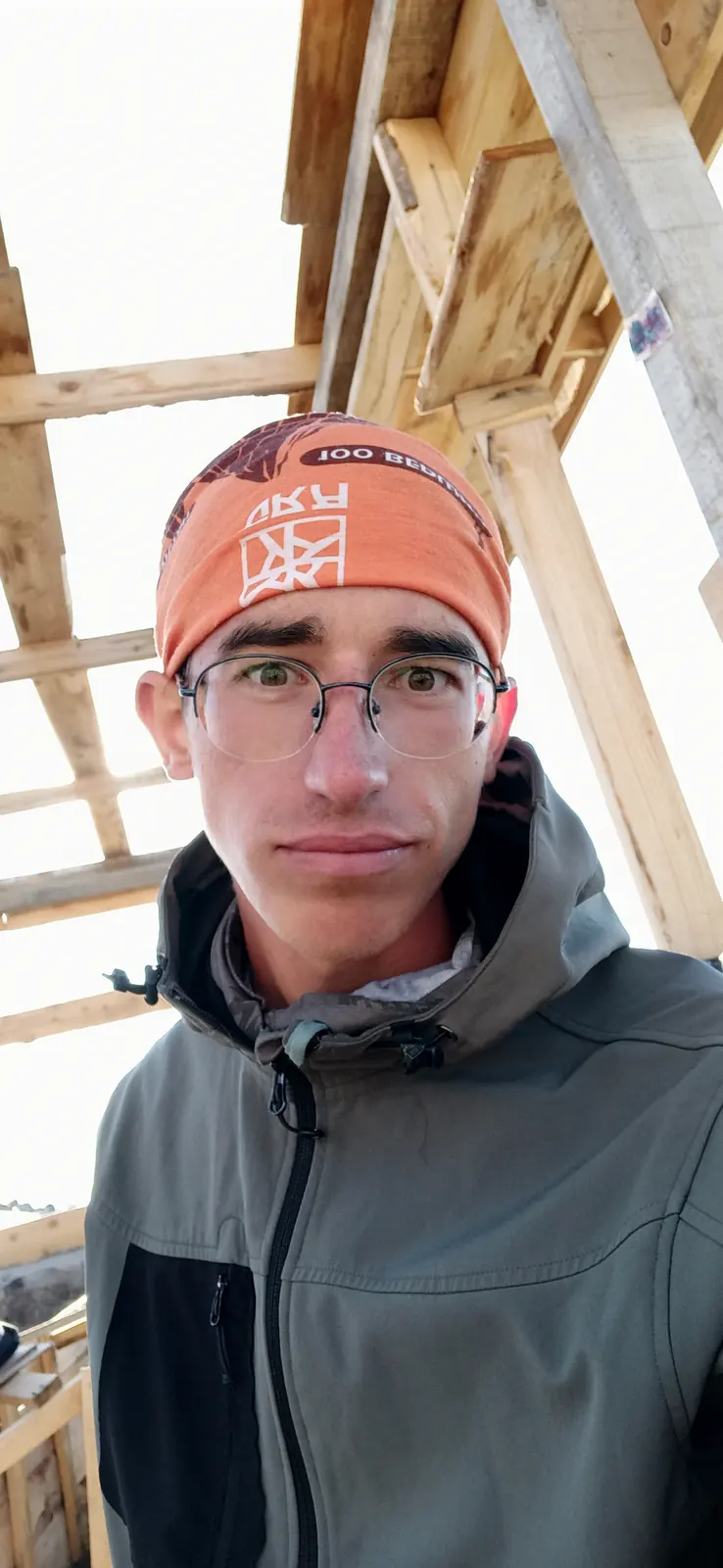
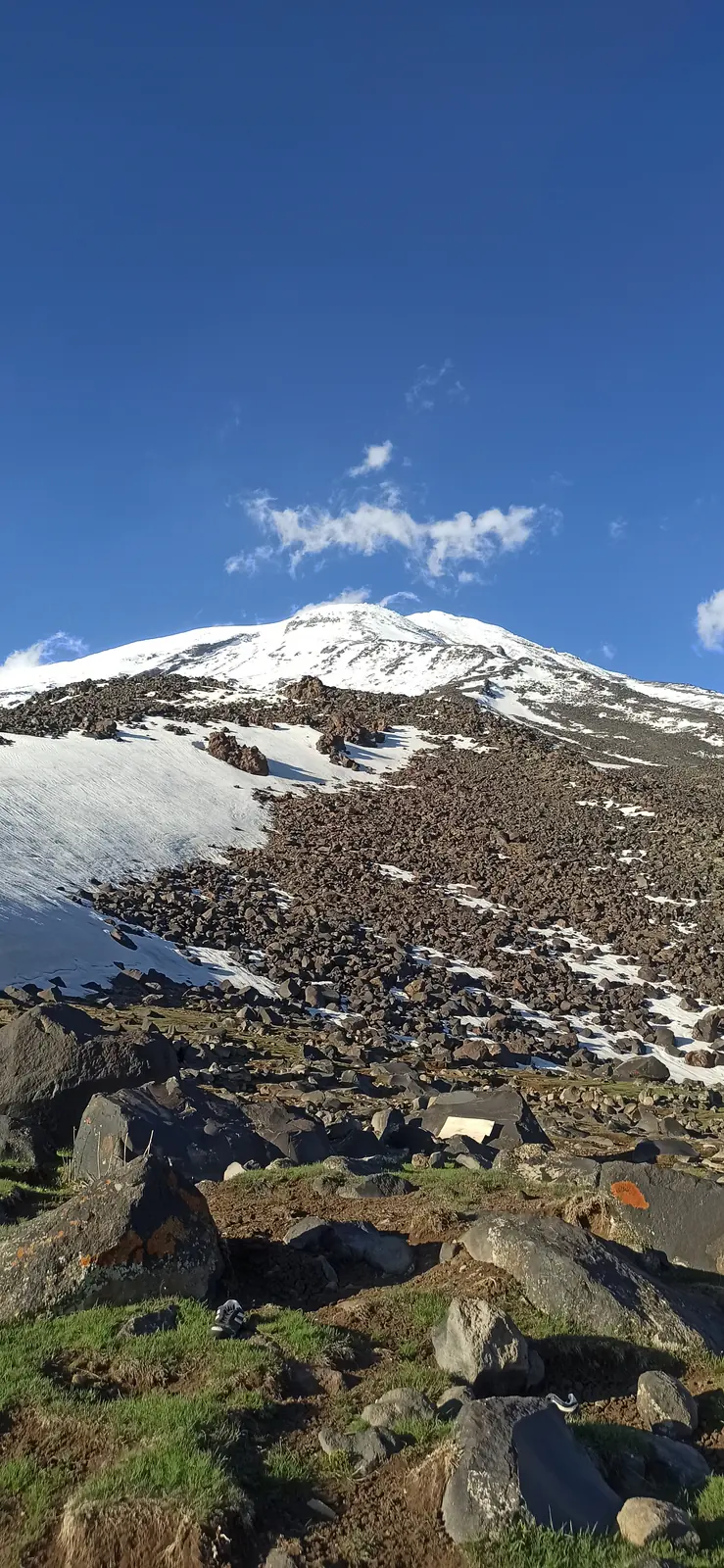
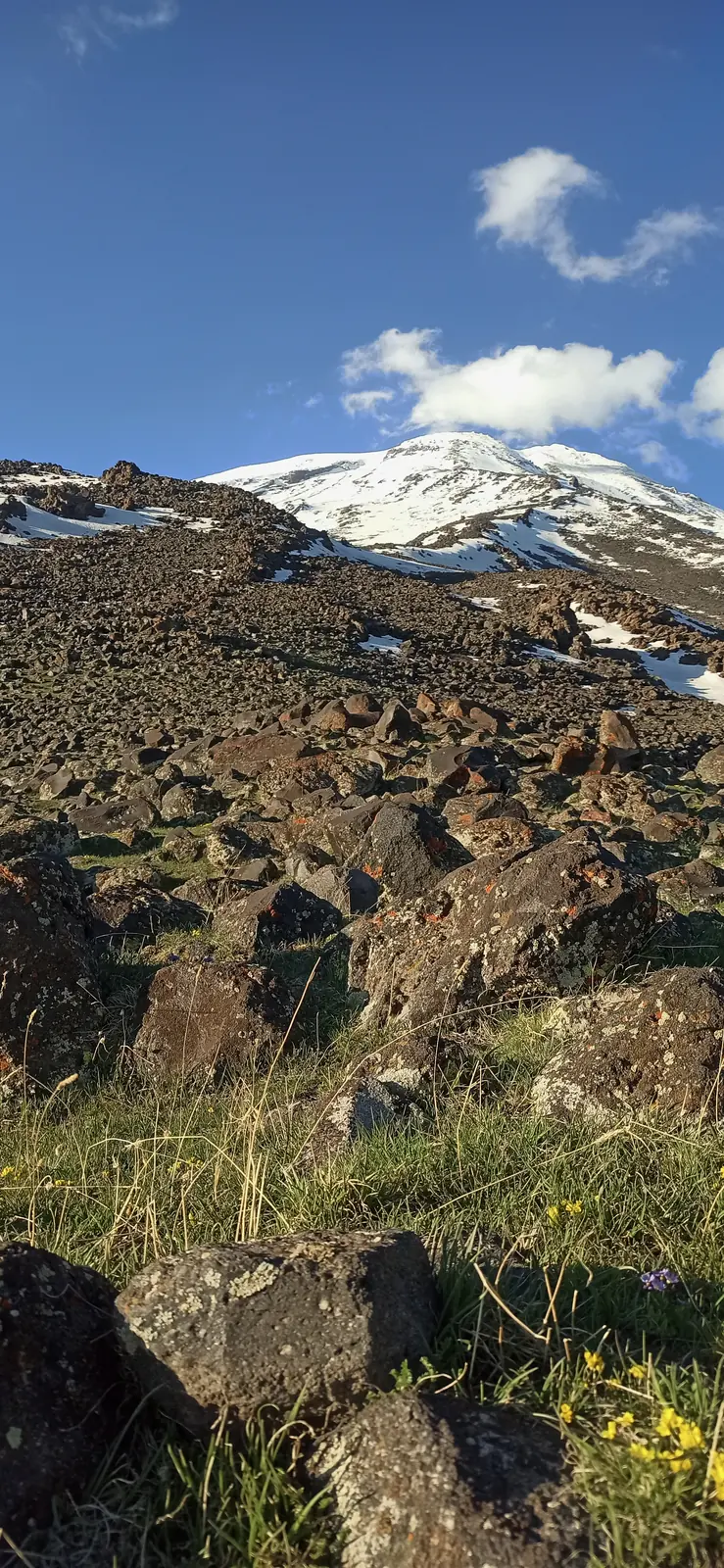
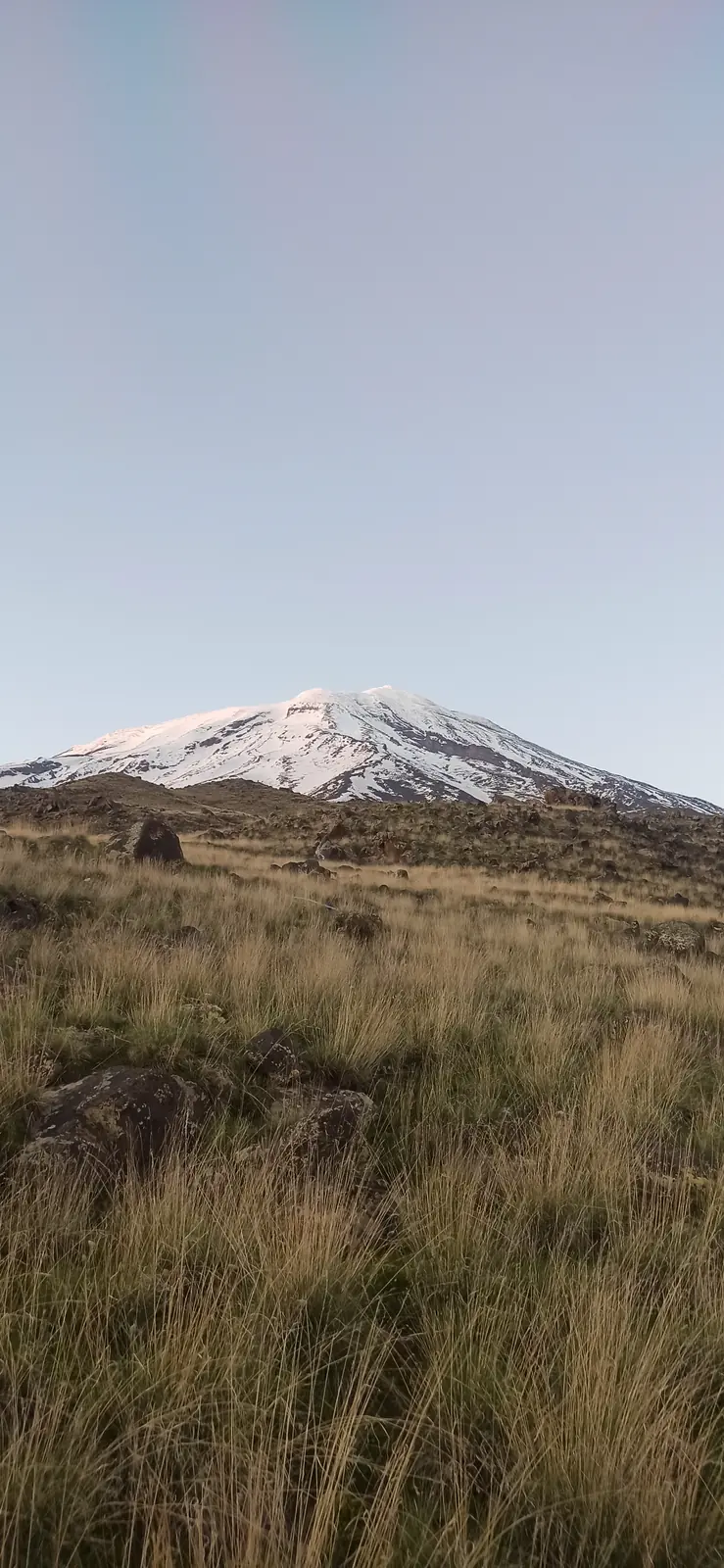
As soon as I got to Doğubayazıt, I walked straight through the town looking for a way to Ararat.
01 · The checkpoint
“He’s with me.”
I hitched a car that took me closer to the mountain. Then came a car going right up to the village inside the protected area. That area is closed: it’s guarded, and you’re not allowed to drive in. But one of the men in the car, who had agreed to give me a lift, told the guards I was with him, and they let us through.
It turned out he was a guide for Ararat, and he wanted me to pay him for the pass. I told him I didn’t have money, and he got really angry. I said that all I had was fifty euros, or maybe a hundred, I don’t remember exactly. He even gave me some Turkish lira back. In the end I paid him about forty or fifty dollars.
The pass≈$50
Gearrunning shoes
Cramponsnone
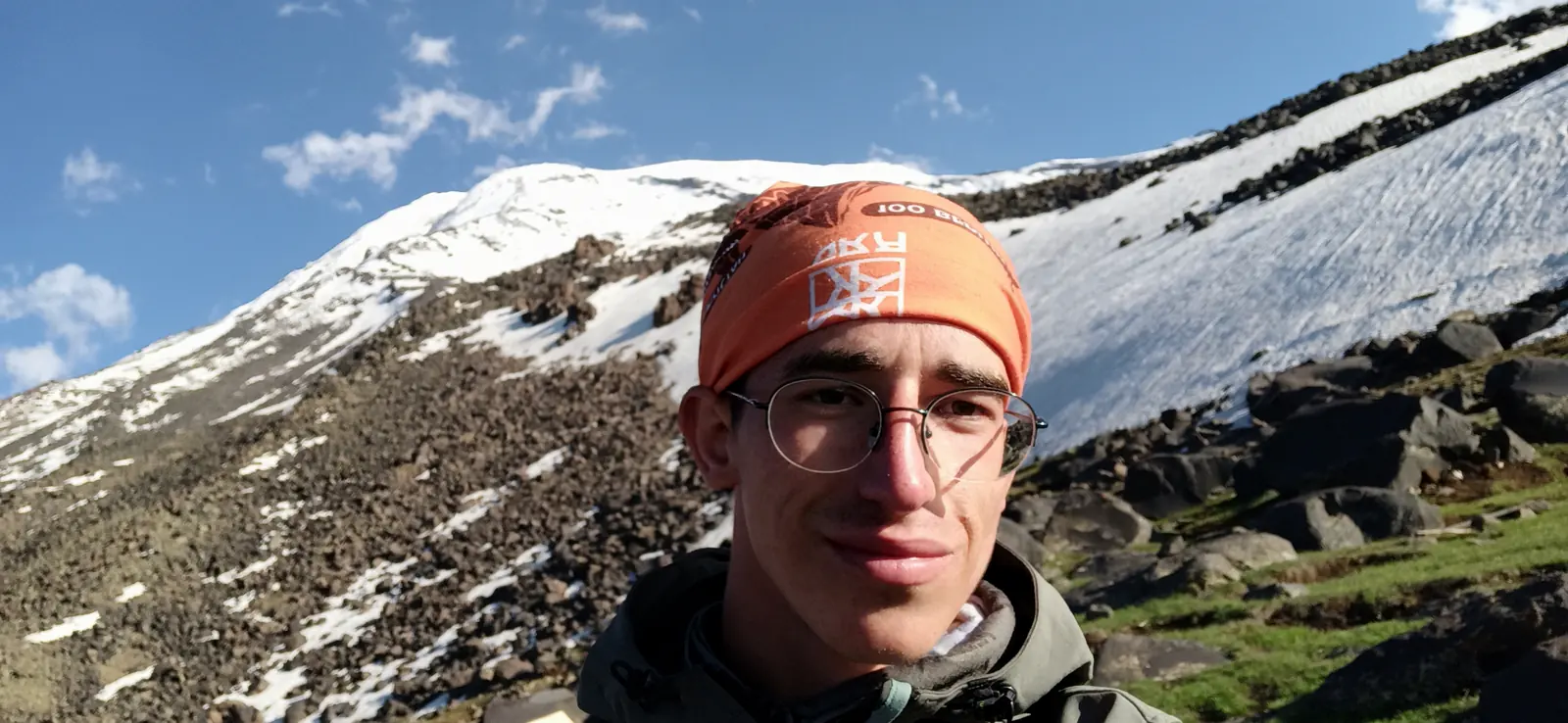
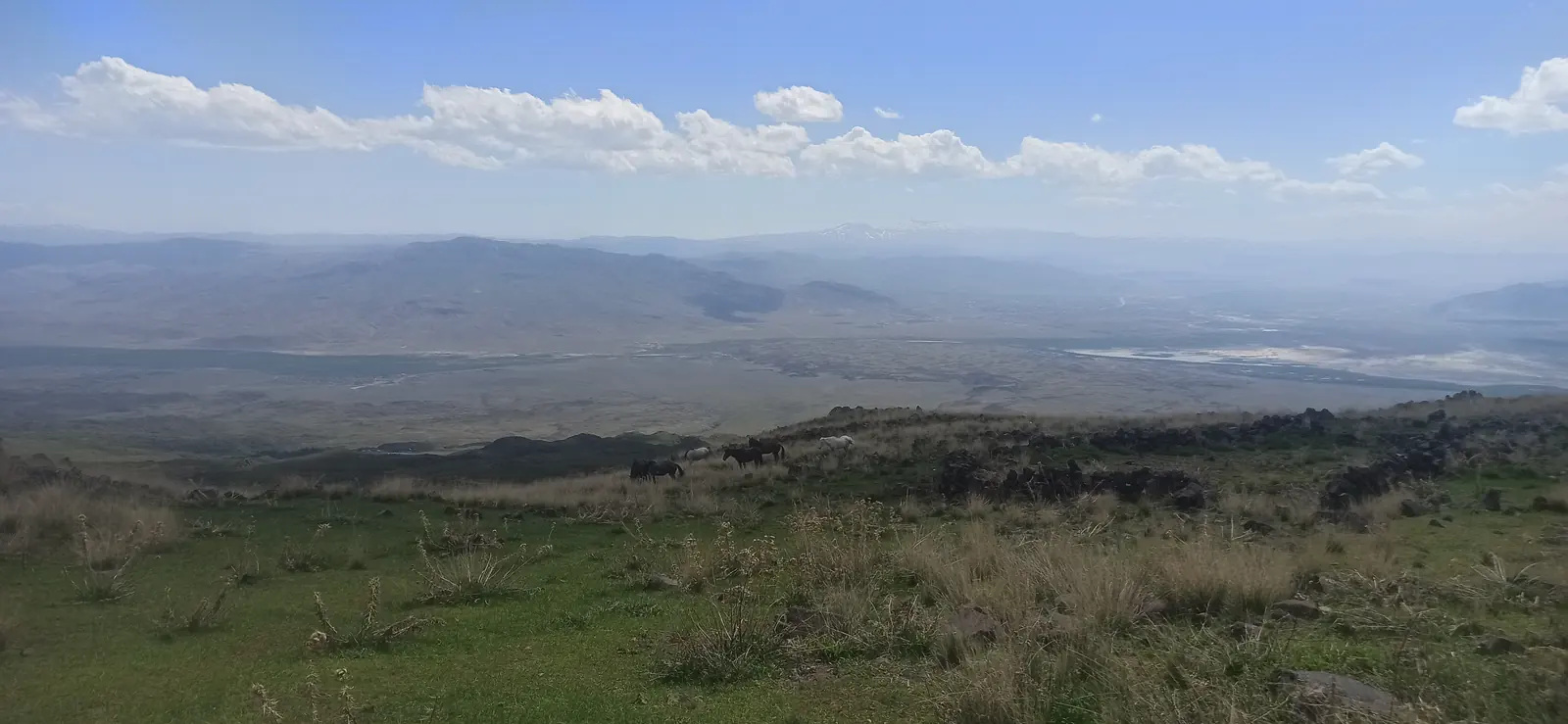
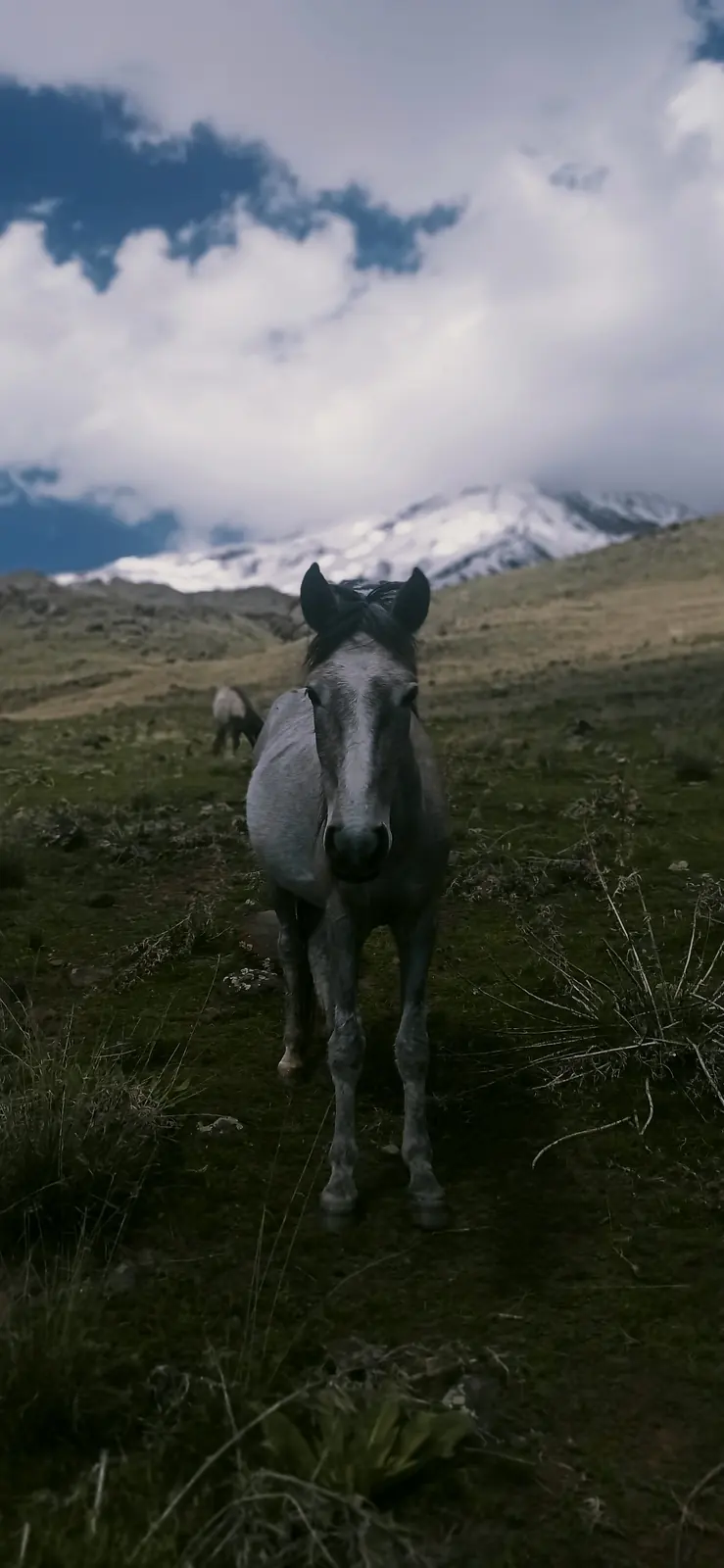
The plain belowCompany on the way up
The kit · 2021
Running shoes. No crampons.
I’d read that Ararat isn’t a hard mountain, but that you need the right gear. I badly underestimated what “the right gear” meant.
5137
m↑
ShoesOrdinary running shoesThe pair from the Lycian Way, back on for the climb. The rest of the trip I wore sandals.
CramponsNoneThe Italians had some. They were leaving the next day.
Sleeping bagToo thinWarm by day, below zero at night.
PolesTwo, then oneOne broke on the way down.
Sun protectionNoneNo cream, nothing over my face. I paid for that for a week.
Mount Ararat · relief from elevation data, height ×1.6Scroll · 0%
Ağrı Dağı
The highest mountain in Turkey.
5,137 metres. A dormant volcano a few kilometres from the borders with Iran and Armenia.
May 19 · afternoon
Up to camp.
From the end of the road to base camp at about 3,500 metres. Warm in the sun.
The night
Below zero.
No proper sleeping bag, no warm clothes. I froze and couldn’t sleep.
May 20 · around noon
170 metres short.
Fog, wind and ice under my feet. I fell, slid, fell again, and turned back.
The way down
Twenty-five kilometres.
Sliding down melting snow, one broken pole, and walking on until midnight.
5,137metres
02 · The night
Too cold to sleep.
On the first day I climbed to base camp at about 3,500 metres and stayed the night. During the day it was actually warm. At night the temperature drops below zero, and I had neither the sleeping bag nor the clothes for it.
I froze. I couldn’t sleep. Towards morning I just lay there, and then I understood that I had to get up and go. That was the right decision. In fact I should have started even earlier, in the dark, because by lunchtime the mountain is covered in fog and cloud. I didn’t know that then.
Camp, getting up
03 · Light
Twenty kilos stayed at camp.
I left part of my gear at base camp, since I was coming back that way anyway. I didn’t want to drag all twenty kilos up the mountain.
04 · The Italians
“You can die.”
On the way up I met some Italians. They said they could have given me crampons, but they were leaving the next day, so it was too risky for them, and they wouldn’t give me anything. Then one of them said: “You can die.”
I said: “OK, good to know.” And I kept climbing.
“you can die.” — ok, good to know.
05 · Step by step
Every step cut with a pole.
At that altitude there is less air, and every step is harder. I also didn’t know how easily you get sunburnt up there, and that you have to cover your face. On the frozen slope I often had to cut each step into the snow with my poles, just so I wouldn’t slide back down.
It was a genuinely risky climb. But I wanted the summit. I’d paid fifty dollars to get in, and for me that was a lot of money, so I wanted to get to the top no matter what.
Two days on Ararat · heights approximate
06 · Fog
Not today.
By lunchtime I was right below the top, almost at five thousand metres, about 170 metres short of the summit. That’s where the ice begins, and that’s when the fog came in. A strong wind. Nothing visible around me. Ice under my feet, on a slope.
I walked, and fell, and slid. I could barely see where I was going. I could tell the direction of the track, but I kept falling and drifting off to the side. The first time I fell, I slid, got up and tried again. I fell again. And I understood: this is not the day I climb this mountain. It was too dangerous.
07 · The way back
Following crampon marks.
Even getting out of there was hard. What saved me were the marks in the ice left by other people’s crampons. I followed them back down through the fog.
08 · Sliding
A broken pole.
On the steep slope I just stood on the soft snow and slid, carried forward, for a very long way. Somewhere along the way one of my trekking poles broke. At the bottom I picked up the gear I’d left at camp and kept going.
Back at campThe top I didn’t reach
09 · Midnight
Twenty-five kilometres.
That day I walked about twenty-five kilometres. I came down almost all the way to Doğubayazıt, looking for a place to sleep, and kept walking until at least midnight. Then I put up my tent somewhere and slept.
Flowers againArarat, from below
10 · The morning after
My face, burnt.
On the mountain I hadn’t used any sun cream and hadn’t covered my face. Up there, with the snow and the thin air, the sun burns far faster than anywhere below. On the first day my face felt more or less normal.
The next morning it was swollen. My lips were swollen too, and the skin had started to weep, oozing the clear fluid a burn gives off when it blisters. It was probably a second-degree burn. My face got through it in the end, but my lips cracked and stayed cracked for at least a week. Eating hurt. Smiling hurt. Burnt lips are a special kind of pain.